MEMBER EXCHANGE – Building career satisfaction

If we were to ask you to list all the words that describe how you feel about your career, or how you view it, do you think there would be more positive words than negative?

Often, we get caught in the trap of thinking we have little or no control over our career, that we’re hostage to the current economic climate, employment opportunities and others’ decisions. To a certain degree these elements have an impact, but they don’t need to have complete control over our career satisfaction.

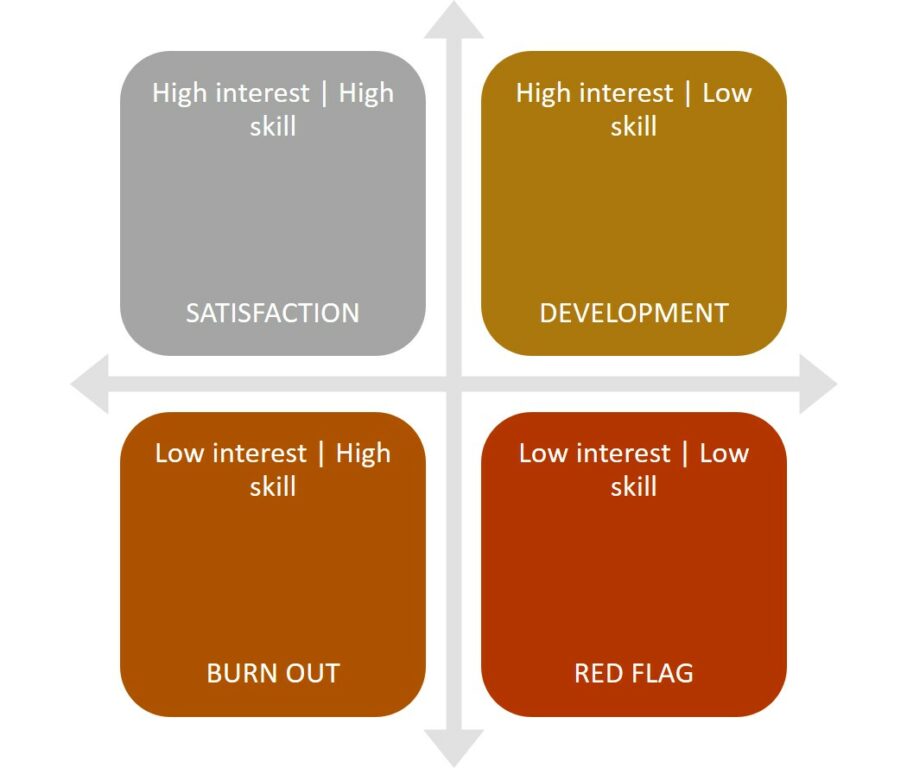
If we understand some of the reasons why we don’t feel satisfied in our career, this can provide the first step to addressing some of the simple issues that have arisen over time that fester into seeds of discontent. The quadrant below can be a useful tool in identifying the specific elements of your current role/or career which give you satisfaction; areas in which you’d like to be developed; those skills that you’re good at but really don’t find interesting or rewarding; and the danger zone of being out of your depth. Once you’ve worked through this you’ll have some specific details on which to focus your energies.
It’s certainly worth considering factors such as:

  • Your own and your employer’s expectations
  • Your relationships with your colleagues
  • Your cultural and values fit within the organisation
  • Your growth and advancement opportunities
  • How you spend the bulk of your day and if you are interested in this aspect of the work and skilled to complete it
  • Whether you have an opportunity to be innovative and actively contribute to the overall outcomes of the organisation
  • How long you’ve been in this role or at this company
  • Whether you can showcase your skills and abilities

You’ll see from this list much of our sense of career satisfaction is subjective and based on our perceptions of the situation.

One of the fundamental challenges of achieving career satisfaction has to do with how long you’ve been in a role. If you’ve worked for the same organisation for several years, earned a promotion, developed new skills and knowledge and are recognised for your contribution; it’s easy to maintain career satisfaction. The difficulty arises when, regardless of how long you’ve been at a company, there are limited opportunities for growth and development, or advancement and reward. Often when we perceive a lack of opportunity, we become complacent and resentful. Our interest in the role is reduced and we become bored and dissatisfied.

However, rather than giving all the power to whatever is happening ‘out there’ we do have control over our actions, behaviours, attitudes, beliefs and choices. This control is no small thing! If our career satisfaction is based on our perceptions of aspects in our careers, we can work at adjusting those perceptions and be proactive in creating opportunities.

Using Kolb’s Action Learning Model as a framework, we’d recommend you work through the following stages in order to have some proactive input into building your career satisfaction.
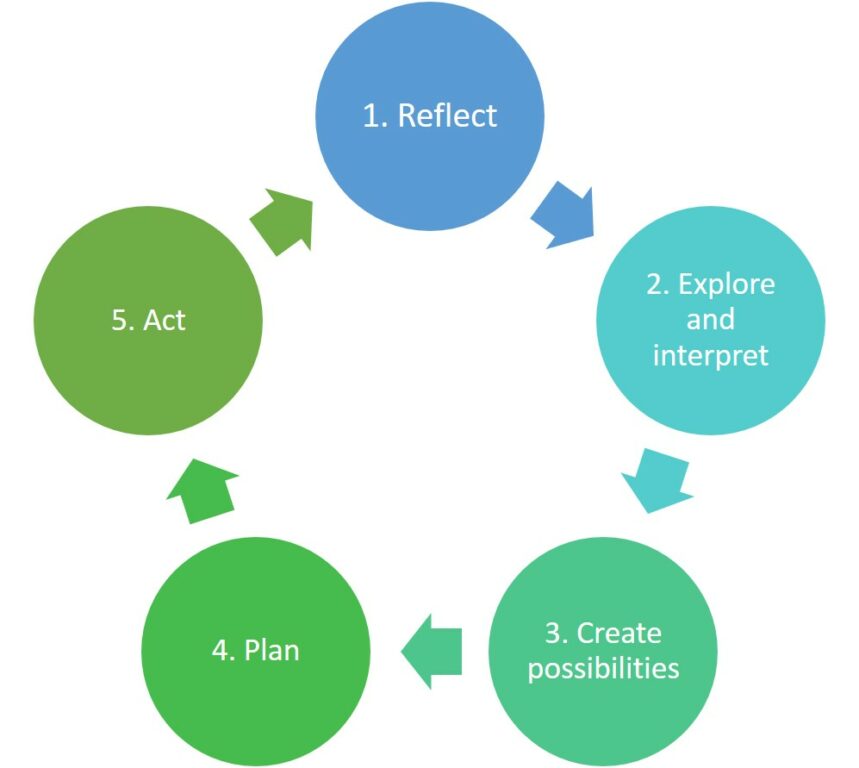
Step 1: reflect

Reflect upon yourself and ask yourself some focus questions, such as:

  • What are my best skills, and why?
  • What are my worst skills, and why?
  • Personal values?
  • Short term and long term goals?
  • What do I seek and what do I try to avoid? Why?
  • What’s my preferred work style?
  • What’s my preferred management style?
  • What’s my preferred communication style?
  • How do I view teams and my contribution to them?
  • Am I a leader and what type am I or do I want to be?
  • What excites and motivates me?
  • What are my strengths and how can I best use these?

Step 2: explore and interpret

This stage is all about how we perceive and feel our situation. Much of our motivation comes from what drives us to engage in the world the way we do. These motivations include beliefs and values, culture, family, view of others and the world. Much of this relates to the ‘why’ of our lives and interactions. When reflecting, delve a little deeper into why that may be important to you or why you would try to avoid it.

For example:

  • Does your current role in your organisation fit with how you view the world in terms of corporate social responsibility?
  • Do your values around work-life balance and being highly engaged and committed when at match your current role and organisation?
  • What is your company’s environmental footprint and is that important or relevant to you?
  • Do they stand for diversity and how do they live it? Is this something you are conscious of or care about?

These are the type of questions that need to explore at this point. Much of your satisfaction or dissatisfaction may arise based on these subjective elements of your career.

Step 3: create possibilities

View the big picture or blue sky of possibilities and how you might achieve or use them to build your career satisfaction. Your skills might need to be showcased or developed to move to the next stage of your career, but opportunities to develop or exhibit your skills also keeps you engaged and boredom at bay.

Looking for or even requesting to be part of projects, secondments, pilot new initiatives (especially if they are your initiatives) are ways to indicate that you want advancement or growth in your role. Your proactive approach is often seen very positively as many managers believe their staff need to take responsibility for their own development. What courses might you study, what training could you undertake, again from your own initiative, rather than expecting your employer to pay for it? Is there someone at work who you can shadow or who can coach you? Mentees and mentors alike need others who they can learn from.

Step 4: plan

Once you’ve done some blue sky thinking it’s time to focus on one or two possibilities to get things moving. The possibilities need to align with your self-reflection, your perceptions and values that you’ve identified in stage 2. You might also find some synergies between this process and your career goal setting as discussed in a previous article. Now would be a good time to revisit that process too.

The plan based on your possibilities needs to incorporate specifics of long and short term benefits, needs, resources and challenges. It’s best if you document or chart these specifics to help formulate a logical sequence of steps to achieve your plan. You’ll also be able to gauge if your plan and its options are realistic within your current organisation. There can also be some benefit of linking this plan to your performance goals for the year. But most importantly the plan needs to be flexible enough to adapt to new information, new circumstances but sound enough that is has a time frame, is measurable and is progressive.

Step 5: act

Although there is enormous value in the first four stages of this model, if you don’t step out of your current comfort or complacency zone nothing will change. It is up to you to act upon your plan to achieve the career satisfaction you deserve. Do the easiest actions first and build upon these giving yourself time to adjust and reflect upon what difference has occurred and how you feel about your career as a result.

Be mindful of how these actions impact others. If the actions have risks attached, then make sure you’ve considered these risks. Have conversations, ask lots of questions, use your networks to get a range of perspectives, but the key is that you can proactively influence your own career satisfaction. A word of caution, keep the plan flexible, keep your eyes and ears open to change going on around you so you can adapt. Although it’s good to keep your overall goal in mind, do be conscious of others and circumstances.

Remember, focus your energies on what you can control and build opportunities for yourself. Be mindful of what you can influence and create your own career satisfaction.

MEMBER EXCHANGE – Steps to successful networking

After building your personal brand, networking is an excellent opportunity to promote it to others. Your reputation will well and truly be on display and yes, you will be assessed by those you meet. Don’t worry, you’ll be doing the same to them. Networking can come more naturally for some than others, but it is an important ingredient in career development.

We live in an age of connectedness and being an effective networker assist you in remaining engaged with your peers and mentoring is often viewed as a proactive and positive means of networking. Mentees –ask your mentor to suggest useful networking events, or even accompany them. Mentors – this can be a great opportunity for you to role-model effective networking strategies, but we would also suggest that you make sure they stand on their own two feet and you take the role of observer to provide them with some constructive feedback.

Our focus here is on the ‘in-person’ networking. However, it is also helpful to think about how you will maintain your connection with these new contacts online. You may also consider using special groups for networking. Once you’ve connected in person, think about sending an online connection request. A word of caution – be careful who you connect with given that they will also have access to your contacts. Be conscious of your personal band, bearing in mind your connections will also reflect your brand. Simply put – use online networking to support your in-person networking.

Effective networking can have profound benefits for both mentor and mentee.

Here are some key steps to assist you in your networking (and a few tips on what to avoid!).

Step 1: have a purposeful networking plan

Networking in order to grow your career needs to be purposeful. One of the subtle traps that both mentees and mentors can fall into is thinking that “I’ll be at XYZ event and get a chance to network.” However, when they get there, they bump into someone they know who they haven’t seen for some time and get chatting and before they know it the opportunity to network outside of their current network has passed. Some simple steps to keep in mind are:

  1. Know the why. Decide why you are attending this networking function – have a clear expectation of what the benefits are going to be of you giving your time, energy, effort and (potentially) money to attend.
  2. Set a target. Specify how many new contacts you wish to make at this event. Be realistic. You might want to limit it to three or four.
  3. Be purposeful. It’s easy to meet many new people at an event, but before arriving, hone in on the types of people you want to connect with. Be clear on what benefit you will be to them and them to you. We’ll come back to this point later.

Step 2: be productive

Networking often takes us out of our comfort zone. After all, no one likes to be rejected. So it’s important to be in charge personally of your strategy and. Being proactive means you ask for what you want and need.

This requires energy and effort. Being proactive can be tiring but it always pays off. Being a fringe dweller isn’t a proactive position at a networking event. It may be more comfortable for you, but it certainly won’t get you noticed or get you right into a conversation. Be prepared to be persistent as you may need to approach certain individuals several times.

What about when it comes to breaking into a closed conversation circle? A top tip from a senior diplomat is to take the direct approach. This doesn’t mean pushing in and taking over the conversation – this is never OK. Instead, approach the group by moving directly to the person who is speaking and gain eye contact with them. They will naturally then include you in the conversation and you will find members of the group shuffle around to fit you in. Then you have the opportunity to contribute to the conversation. Remember, don’t linger along the sidelines, don’t be a fringe dweller.

Step 3: think win-win

Thinking in terms of ‘What’s in it for me’ doesn’t focus on relationship building. This isn’t to contradict Step 1 – this is to reinforce the need to be purposeful in who we want to meet. In the purposeful plan that we develop, a key element is to identify what you might have to offer in return. It’s about keeping the balance in the networking situation and the resulting professional relationship.

So, what are you going to give in return? How are you going to maintain appropriate contact? A simple way of giving back is to be mindful of them and what you know about them. For example, you may have read a journal article that relates to something you spoke about. Take the initiative to send it through to them acknowledging that it may be of interest to them. It doesn’t matter if they’ve already seen it. What matters is you’ve demonstrated that you were genuinely listening to their input and that you are mindful of the connection. You may like to invite them to an event you’re attending and take them as your guest. Mentees, it’s easy to take on the mindset that your mentor doesn’t need anything from you – this is not true. These networking step also relate to your mentoring relationship.

Step 4: build rapport

Your mentoring resource guide refers to the need to build rapport as a foundation for building an effective mentoring relationship. The same can be said of networking connections. It’s too easy to go to an event and be caught in the business card shuffle. This isn’t networking! This is scattergun marketing, a completely different style and purpose.

If you accept the premise that networking is about creating purposeful professional relationships that are mutually beneficial then it is natural that you will take the time and effort to build rapport. This may not happen at a first meeting. You may, indeed, exchange business cards but the follow-up request to catch up for 30 minutes over coffee is when you can build rapport (this meeting also needs to have a purposeful plan). Therefore, a purposeful plan and gathering only a few contacts per event is important.

Step 5: prioritise

Effective networking takes time, effort and energy. You need to step out of your comfort zone and be consistently engaged. Making purposeful networking a priority is so important for moving forward in your career.

IML ANZ’s mentoring program is a great start for this kind of networking. Whether you are a mentee or mentor there will be opportunities to network with and through each other. We understand that you are all extremely busy people. Life is full and yet, we do suggest you prioritise the time and energy on effective networking.

We would encourage you to participate in purposeful networking events, be proactive in how you engage with others and the way you contribute to them. The benefits of making this a priority – putting time, energy and effort into building rapport far outweigh the challenges. This is another way of building your reputation and growing the career you truly want.

MEMBER EXCHANGE – Building personal brand

This question is something we all need to ask ourselves regardless of where we are in our careers. But what is actually being asked? Do you have a clear understanding of the elements that creates brand “you”? Brand is more than a name, it encapsulates the qualities and values attached to you. It includes the vision you have of yourself and your career while others will have an expectation of what to expect from you given your brand. Your brand is not your company. Your brand doesn’t only get turned on when you walk through the door for work. Your brand needs to always been on – it needs to be authentic and consistent if it’s going to provide value to you and your career aspirations. Your brand is your reputation and it needs to be guarded carefully and built purposefully.

So, how do you build your personal brand? How are you going to set yourself apart from others within your organisation or within your industry? Career opportunities are highly competitive even within your current company. Your qualifications, your experience, your extra-curricular activities all contribute to your brand, but there’s so much more to be considered to set you apart from the rest. Before we move into the ‘how’ of building a personal brand, please note that we are assuming you already have an online profile on a reputable professional networking site such as LinkedIn, so when discussing building a brand, that brand in person needs to also be accurately reflected online. We encourage you to modify your online profile according to the learning you have regarding personal brand.

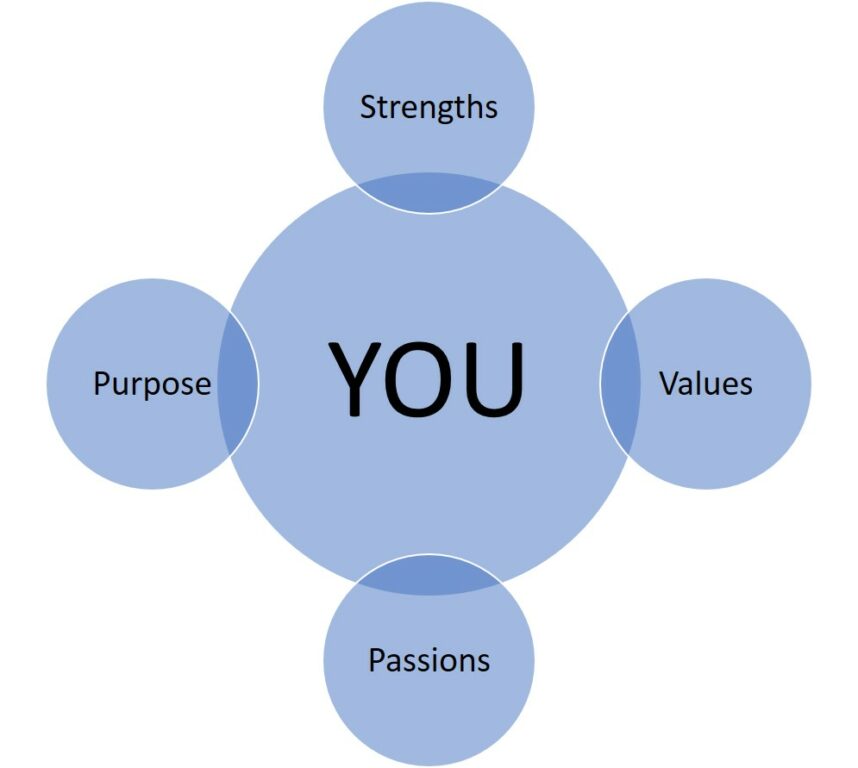
The Venn diagram below identifies the four key elements to your personal brand. These elements are the broad categories to focus on when building your brand.

For each of these elements the following strategies are useful in assisting you to build your brand.

Reflect – you will need to ask yourself some, at times, challenging questions and provide honest answers to gain an accurate appraisal of the brand element.

  1. From your reflection, create a short list of descriptive words to describe yourself. This is your starting point. Include the ‘gaps’ or areas that need attention or development.
  2. Allocate these descriptions into lists of positive or ‘challenging’ attributes. These challenging attributes can be weaknesses if not addressed.
  3. Look for connections between career attributes, personal attributes and contribution attributes. By this, contribution relates to the non-work contributions you make in life, with teams, groups, even family and friends. The fuller the picture, the more accurate the starting point.

Research – how do others perceive you, your contribution and skills, and the way you relate to others?

  • Do you notice any repetition or themes with your list? Are there any surprises at this point? Have you asked people to be honest and genuine in their responses?
  • What aspects of the feedback will you build on in your brand and which ones will you try to minimise?

Modify – once you’ve identified aspects of your brand which need attention you will need to develop appropriate strategies to modify them to include them in your brand.

  • Develop a strategy to enable you to effectively modify your approach, interactions, language, skills, knowledge to highlight your strengths. We’d recommend focussing on those elements that can be easily modified just by being more conscious or purposeful about them.
  • Don’t try to modify or adapt all the ideas at once. Work through logically and assess for yourself how important each element is for you and your brand.

Apply – the modified elements are applied to improve personal brand.

  • Make it real. Authenticity is vital at every stage. Be practical in your application too, for example, through your online profile and through feedback from your colleagues and clients.
  • Identify and be involved in activities, projects, conversations and groups which reflect the positives of you and your brand.

Repeat – use this process periodically to ensure that your brand accurately

The four elements of personal brand are discussed below. We’d recommend you apply the above strategies to each.

Strengths

It seems natural to identify and highlight strengths when building your personal brand, after all, this is your reputation which is being built and reflected. We would certainly recommend you focus on strengths, but don’t lose sight of the growth and learning potential that can arise from understanding your weaknesses. They are an excellent impetus to make changes in your life.

Strong self-awareness = strong brand.

One of the interesting aspects of examining your strengths and weaknesses relates to the perception of others. This photo of the woman rock climbing, for example, can be used to represent strengths such as courage, willpower, determination, agility, flexibility and skill. However, another person may perceive this image and view her as reckless, irresponsible, unable to measure risk, ego driven or even a little crazy! As you work through the element of strengths, you will need to be mindful of identifying descriptions that are meaningful, knowing that what you perceive as a strength may not be so to others. Your strength of being flexible and adaptable in an environment of change could be seen as a weakness of lack of consistency in a more regulated or structured work environment. Qualifying your strengths with quantitative and qualitative examples can be helpful.

Values

Do you know what’s important to you? If you do, it’s probably related to the values you hold – those core aspects of how you engage with the world (self, others, and the environment) that you pride yourself in. Those aspects of being a person who seeks to demonstrate what’s important to them, what they put value in. We talk a lot about a company’s values, usually, they’re referenced on websites or in their marketing material. The standards of conduct they expect from every single employee. Company brands reflect and build upon these values, and essentially, we need to do the same. There are values audit tools you can download from the internet if you want to go down that path. But you can simply ask yourself – what’s important to me, and why? We would recommend that you identify approximately 5-7 values and these need to be included as part of your profile. You need to build a reputation for living these values consistently. Ideally, you want people to say that you “walk the talk”. These are the essential elements of how you want to be known and how you choose to conduct yourself.

Passions

Passions can be easy to identify – ask any of your friends, even your colleagues and they’ll know exactly what you love! Be it a creative pursuit, community activity, sporting team or relationship – they know because you can’t help talking about it, you want to spend time with what you’re passionate about. If we’re fortunate, our career may include an element of a passion we might have. For example, you might be really passionate about everyone being treated fairly and in your work you’re the diversity officer, the advocate for the new team members, or part of the union. Similarly, in your personal life you volunteer for a community group or work on a helpline to support others who are less fortunate. Your passions often reflect your values and when they are aligned the synergy in your brand is easy to demonstrate and sustain.

One of the traps people can fall into is referring to their passions too often and at inappropriate times or through inappropriate forums. We’ve talked about having an online presence through a professional networking site. Most of us also use social media through Twitter, Facebook or Instagram – for example. It’s vital that you know the purpose of each, the audience of each and that your personal brand remain consistent. People will be “assessing” your brand online. This forum can be used to assist in building your brand or can be detrimental, so be wise in what you ‘put out there’. One of the interesting aspects of having an online presence is seeing what people are passionate about and often who or what they ‘follow’ can give you a good indication of what’s important to that person. Just as we do it to others – they will be doing it to us. Is your online presence aligned to your personal brand?

Purpose

The final element of your personal brand is to pull together your strengths, values and passions, (minimise your weaknesses) and fulfil your purpose. It’s actually a challenging question to ask yourself – “what is my purpose”? Your personal brand development enables you to live your purpose specifically in your career, but this can easily be translated into your life generally. This article has talked about the need to be authentic and a key reason for that authenticity is for you to live your purpose. This isn’t genuinely possible if you haven’t been honest with yourself in the process of building your brand. Your reputation is going to be evaluated, often sub-consciously by others based on the evidence you demonstrate around your purpose. The “why” you deal with others using integrity. The “why” you put time and energy into growing your team. The “why” you treat others with respect; provide solutions; follow your dreams; give back to the community; have a ‘can do’ attitude; provide excellent service, and so on. So many of these “why” questions are answered in subtle and overt ways through your personal brand.

We’d encourage you to take the time to go through the five stages and apply them to each of the four elements of personal brand “you” to create the reputation your desire and deserve.

MEMBER EXCHANGE – Successful careers through solid planning

Gone are the days when careers meant moving straight up a ladder. These days, career paths have become more like a lattice – you might take steps upwards, sideways or even downwards.

That’s what makes career planning a crucial step in managing your learning and development. Regardless of where you are in your career, it’s useful to explore the path that you’re on. By developing new knowledge and skills, you’ll be well equipped to move into that new opportunity, no matter where it is on your career lattice.

Think of career planning as a continuous process of:

  • Reflecting on your interests, values, skills and preferences
  • Exploring the life, work and learning options available to you
  • Ensuring that your work fits with your personal circumstances
  • Fine-tuning your work and learning plans to help you manage changes in life and work

You can revisit and use this process at any stage of your career.

Start at the step that is most relevant for you now.

Planning cycle

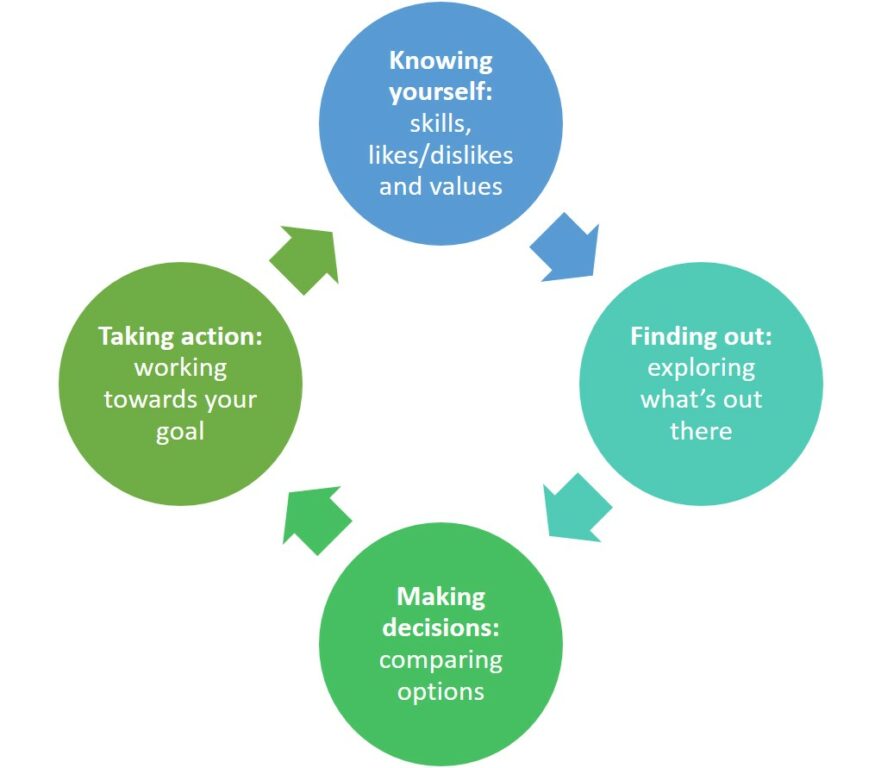
The career planning process has four fundamental steps:

Step 1: knowing yourself

Step 2: finding out

Step 3: making decisions

Step 4: taking action

Let’s take a look at each step.

Step 1: knowing yourself

Ask yourself:

  • Where am I at in knowledge and skills now?
  • What do I want out of a job or career?
  • What do I like to do?
  • What are my strengths?
  • What is important to me?
  • Where do I want to be?
  • How will I get there?

After this, you can work on getting to know your skills, interests and values.

At the end of this step, you will have a clearer idea of your work or learning goal and your individual preferences.

The SWOT analysis in Article 1 can also be of great use to you at this point. You can use this information about yourself like your personal ‘wish list’ against which you can compare all the information you gather in the next step: finding out. Your personal preferences are very useful for helping you choose your current best option, which you can do in Step 3: making decisions.

Step 2: finding out

This step is about exploring the roles and learning areas that interest you. Once you have some idea of your job preferences you can research the specific skills and qualifications required in those professions.

  • Explore. Ask people around you about their roles, how they achieved success in their career. This mentoring program is an excellent forum for learning about others’ stories how they built their career.
  • Identify. Pick out roles that interest you. Assess whether your skills and interests match up with the job’s requirements. Do you have skills that are transferrable for this particular role or profession?
  • Develop. Taking on projects in your current workplace is a great way to close any knowledge and skills gaps to further your career journey. Also, look at developing skills outside of work. Sporting, community and charity groups always need people with a vast range of skills.
  • Locate. Do research not just on careers but on companies who you think you’d like to work with and where your interests and values align. Find out where your preferred roles are on offer.

At the end of this step you will have a list of preferred roles, companies you’d like to work with and opportunities for further learning.

Step 3: making decisions

This step involves comparing your options, narrowing down your choices and thinking about what currently suits you best.

Ask yourself:

  • What are my best work or training options? How will these currently impact on my work and life situation? How long will it take to get appropriate knowledge or qualifications and how do I manage my career in the meantime?
  • How do they match with my skills, interests and values?
  • How do they fit with the current labour market? What’s happening in the economy and politically? Is there opportunity for career growth within my current organisation or region?
  • How do they fit with my current situation and responsibilities?
  • What are the advantages and disadvantages of each option?
  • What will help and what will hinder me?
  • What can I do about it?

At the end of this step you will have narrowed down your options and have more of an idea of what you need to do next to help you achieve your goals. We would recommend that you use the Kolb Action Learning model in your Mentoring Resource book. This will provide an excellent tool to assist you at this stage of planning.

Step 4: taking action

Here you plan the steps you need to take.

Use all you have learnt about your skills, interests and values together with the information you have gathered about the world of work to create your plan.

Begin by asking yourself:

  • What steps will help me achieve my work, training and career goals?
  • Where can I get help?
  • Who will support me? Who can give me a reality check about my choice at this stage? What might be some of the barriers moving forward and how will I overcome them?

At the end of this step you will have:

  • A plan to help you explore your options further (work experience, work shadowing or more research); or
  • A plan which sets out the steps to help you achieve your next learning or work goal
  • Decide which step is relevant for you right now and start from there.

In all of this you need to remember that your career doesn’t happen in isolation to other aspects of your life.

As you work your way through the model ensure that you’re taking your entire life circumstance into any decisions you make.

Real rest: Switch off from work and feel good

By Jane Caro

We live in an era that worships work. Far too many of us believe that unless we are actively doing something every waking moment, we are wasting time. Many people feel guilty about scrolling aimlessly through social media, whiling away an afternoon (or even a whole day) binging on a TV series and/or nodding off on the couch.

I am not one of those people. We all have our gifts and my ability to be completely idle without guilt is one I value dearly.

Such is our worship of work that we even turn attempts to relax into a form of pressure. Wellbeing, mindfulness, meditation (yes, yes, I know they benefit many) are far too worthy and earnest for me. I don’t want to be lazy and do nothing because it’s good for me (even though it is). I want to do it because I like it and my joy in skiving off is actually enhanced by a messy house, laundry that needs doing or dishes that need washing.

SLAVE DRIVER

Perhaps this is also because I work for myself and I have never had a more demanding boss. She (me) is always taking on more work, agreeing to impossible deadlines and working on weekends. She says yes to far too much. Some of it unpaid! This slave-driver (me) is the reason I feel entitled to rebel against her (myself) on a regular basis and collapse on the couch, Netflix remote in hand and give myself over to blissful self-indulgence.

If you run a small business or work as a freelancer or subcontractor, you will know how hard it is to carve out a little time for yourself. If you are not actively working, you are accounting for that work, taking care of the inevitable admin tasks or you are actively seeking more work. It is hard to escape the nagging sense of guilt whenever you’re not actively engaged. But, take it from me, it is necessary both for you and your business. Let’s not even mention your family.

Recreation is a word that we no longer understand. It literally tells you to re-create yourself through activities – or lack thereof – that have no purpose but fun. It is no accident that creativity is part of the word. If you work till exhaustion, if you haul yourself miserably through every day or even most days, your productivity will fall. You are not at your best. Your heart is no longer in it. You’ve lost sight of why you started your business in the first place.

LOVE WHAT YOU DO

Every successful small business has one important similarity – a principal who loves what they do. Now, that doesn’t mean you have to love it every day, or love every task, or even every customer, but you have to love what you do and what you provide – at least most of the time. The paradox of hard work is that you can have too much of a good thing. If you lose your joy in your business for too long, you are at risk of eventually losing your business. When you lose joy, you lose creativity and the ability to come up with new solutions.

We have an epidemic of anxiety in our modern world, brought on for many, I believe, by overwork. Exhaustion is a result of working too hard for too long with no emotional reward. Exhaustion is useful to those who would control our world. Exhausted people, terrified of losing their income if they take so much as a holiday, are compliant people. It’s not just their businesses that become plodding and uninspired, it is their citizenship, their family lives and their view of the future. And, I know this is modern-day heresy, but I believe that if everyone worked 30% less, everything would improve. We’d be more joyful, rested, fun-loving, hopeful, generous, energetic and creative.

I know this is modern-day heresy, but I believe that if everyone worked 30% less, everything would improve.

Maybe the essential paradox of running your own business is that it may be the time when you let yourself lollygag, laze about, daydream and, yes, scroll aimlessly through social media, that is when you are able to have your best ideas and come up with solutions that all the agonising and late nights in the world will not liberate. You will also model sane behaviour to your employees so they too learn the value of rest and recreation, and so become more productive and enthusiastic. It isn’t the hours you put in that are of the greatest value. It may well be the hours you take out.


This article originally appeared in the December 2019 print edition of Leadership Matters, IML ANZ’s exclusive Member’s magazine. For editorial suggestions and enquiries, please contact karyl.estrella@managersandleaders.com.au.

MEMBER EXCHANGE – Personal SWOT analysis

A useful tool as a mentee is to work through a SWOT analysis with your mentor. The value of this tool is that it can provide a first stage in identifying those aspects which are particularly important to your career and the direction you want to take it. We would recommend that you do a first “run” at the SWOT on your own before discussing it with your mentor. It can be helpful to have some clear ideas before a mentoring conversation so that the mentor can ask targeted questions to help you analyse further.

Your career doesn’t happen in a vacuum but within the context of other aspects of your life. There may be non-work-related experience, knowledge and interests that will have a direct bearing on the transferable skills and knowledge you can bring into your career. So, when using a SWOT analysis it’s vital that you look at the four categories of the SWOT across a range of life aspects such as those listed below:

  • personality
  • beliefs and values
  • personal situation including relationships, children, finances and age etc…
  • education and training – career and personal
  • experience and skills – career and personal
  • interests – career and personal
  • drive and desire in relation to career
  • others’ perceptions
  • special interest groups

Each of these points listed above need to be related to each element of the SWOT in order to get a very accurate and comprehensive picture of you within your career.

S = Strengths. Simply – what are you good at? What strengths do others believe you have? What motivates you and drives you – these will be natural strengths because you will put time and energy into developing them. What inspires you? What gives you satisfaction?

W = Weaknesses. What are your gaps or areas for development? What do you find challenging? What are the things that don’t interest you and you don’t want to incorporate into your career? What are those aspects that you have a great desire to improve but are currently limitations for you?

O = Opportunities. A reality check – what is within the realm of possibility for you at this time in your life? What opportunities are available to you within your current situation? What opportunities are available to you based on developing some skills/expertise or maybe getting a further qualification? What’s realistic?

T = Threats. What limitations are there on you achieving your goals? Who may be blocking your path? What gaps in experience/knowledge will be limiting or challenging to the point of blocking your progress? What external ‘forces’ are threats to you achieving your goal eg: political; economic; geographical etc?

Some things to be aware of are:

  • The more thorough the SWOT analysis the more useful and valuable it will be.
  • A comprehensive SWOT analysis takes time and should be done over a number of goes so that you can keep building on it. It’s like writing a first draft – go back and review and add to it before deciding you want to share it with your mentor.
  • Be utterly honest with yourself. The true value of this tool is that you can have a good look and reflect upon your current situation and needs and areas that need attention.
  • Once you have explored SWOT in relation to the life aspects listed previously it’s time to get some additional perspective from your mentor. Remember to be very open to their questions and perspective. Their role is to help grow you.

Eight moments when leaders must communicate well

By Shane Hatton

When it comes to leading an organisation, every leader fundamentally understands the consequences of a poor leadership approach to finances. We understand the consequences of a poor leadership approach to governance or change management. But how many leaders are fully aware of the consequences of a poor leadership approach to communication?

The impact of ineffective or non-existent communication is felt throughout the organisation. It shows up in higher turnover, absenteeism, negativity and stress; and it perpetuates lower engagement, morale, innovation and productivity. A report from SIS International Research in partnership with Siemens Communications found that an organisation with as few as 100 employees could be leaking over half a million dollars every year as a result of communications barriers and latency.

In a 2013 article, Glassdoor for Employers listed the top five reasons why employees love their CEOs. It wasn’t surprising to read that employees want a leader who is visible both inside and outside the company. Seeing their leader leveraging their platform externally increased pride felt by employees. Hearing regularly from their leader internally, whether they are walking the corridors, writing notes or holding regular town hall meetings, created a culture of accessibility and boosted morale.

Whether in a television interview or online video, a town hall or your weekly meeting, the nature of leadership means you will find yourself addressing a group of people at a moment that demands you do more than just speak – it will be a moment that compels you to lead.

Put another way, every opportunity you have to stand up and speak is a moment either to build or to burn your leadership platform. James C. Humes, speechwriter for five American Presidents, said it this way:

‘The art of communication is the language of leadership. Every time you speak, you are auditioning for leadership.’

James C. Humes

Let’s look at eight unavoidable moments every leader will face. Whether you’re ready for them or not, as a leader you’ll need to know how to communicate effectively and lead your way through them.

  • Moments of pioneering: implementing change
    It has been said that change is the only constant. As a leader you can be certain that you will be required to guide your team through complex change and transition. Some of that change will take you into unfamiliar territory as you pioneer in new spaces. You will need to paint a picture of your desired future, while at the same time intentionally shift fixed mindsets and dysfunctional thinking that causes people to stay where they are.
  • Moments of sensemaking: creating clarity
    You will experience moments of uncertainty when the narrative is open to interpretation. It is in these moments that leaders distinguish themselves. If you cannot tell the story, your people – or worse, someone else – will do it for you. Great leaders view people and circumstances differently and need to help others do the same. You will be required to make sense of uncertainty and chaos and to control the narrative through clearly articulated and compelling messaging.
  • Moments of confronting or reinforcing: shaping culture
    Every time you speak is an opportunity to reinforce and shape your desired culture. By culture, this doesn’t just mean what you want people to do but who you want people to be. The stories you share, the behaviour you confront and the behaviour you reward paint a picture of your culture and reinforce the ‘way things get done here’.
  • Moments of bonding: building connection
    Every moment you have to speak is an opportunity to build and strengthen trust and connection with your team, and trust is a foundation for growth. Leadership author John Maxwell writes, “Teams that don’t bond, can’t build.”
  • Moments of mobilizing: casting a compelling vision
    Do you have a compelling vision or a common purpose to rally around and move towards? Do you know how to communicate it? In his book Amplifiers, Matt Church writes, “It’s been said that when Caesar spoke men wept, but when Cicero spoke men marched.” For a leader to inspire people is valuable but to mobilise people towards action is better.
  • Moments of influencing: strengthening commitment
    Do you have great ideas? Do you want people to buy into those ideas? Do you need something from people? The ability to influence people by articulating and communicating the value of your ideas is a critical leadership skill.
  • Moments of steering: navigating crisis
    There is a challenge and then there is a crisis. As a leader you will be required to navigate both. You must be the calm voice of authority while steering the organisation through turbulence. You must be the steady adviser and voice of reason in seemingly unreasonable circumstances.
  • Moments of translating: managing complexity
    Can you apply your high-level strategy in low-level situations? Can you turn your ideas into strategy and communicate that strategy to generate action? Can you articulate complex information in a jargon-free way that is useful for your team and organisation? In moments that matter, you need to be able to communicate a message that counts. It’s the difference between a person who speaks and a leader who leads.

While all of these moments are unavoidable, all are also important, because every moment you stand in front of your team or organisation is an opportunity to lead. It’s an opportunity to leverage your platform to accomplish collectively in a moment something that might have taken weeks or months to accomplish individually. The question isn’t if you will face them but rather how you will face them. With that in mind, what do you need to do now to get ready?


Shane Hatton is a leadership and communication expert and the author of Lead the Room – Communicate a Message That Counts in Moments That Matter.


Tips for leaders: using digital and online communication tools effectively

By Margot Smith FIML

So often when there is a dispute at work (or in life) it comes down to communication. But more modes of communication should mean that we get it right more often, yes? Not necessarily.

In this increasingly digital world – it’s more important than ever to make sure we do our best to communicate effectively. And effective communication is a real leadership skill – getting it right could make the difference between getting the outcome you want and not. So it’s worth fine-tuning these skills.

Understanding the many and varied online and digital communication tools

When we say online and digital communication what do we mean? It’s an ever-growing list, but let’s say: email, telephone, videoconference, instant messaging or chat, and text at least.

Keeping in mind that when we are face to face with someone, communicating your message is conveyed as follows: 55% body language, 38% tone of voice, and only 7% words.

So if we’re talking email, and we are reliant on the words themselves – that’s a mere 7%. As we change mediums, we slide up that scale in terms of how much more context the recipient of your message gets and how effectively we get our message across. But it can still be fraught with challenges; room for misinterpreting tone, body language or context.

Communication is a bit of a minefield, and is the culprit for many a relationship speedbump!

Tools for the times

The current circumstances mean that we are all using online and digital facilities much more than usual. For those of us who are fortunate enough to be working from home, technology affords us convenience, but we need to ensure it’s not at the cost of relationships and connections. Hence we need to use them in the right context and be careful that our communication is effective in doing so.

And particularly right now.

That’s why I’ve listed five tips for effective online and digital communication:

  • Build a strong relationship offline.
    Doing this ensures your online message is received as intended. (This is the most important rule).

    I find the stronger my relationship with someone, the more latitude I have with the words on the page, tone of voice and, even, body language. For those times that I need to deliver a message online that is difficult – I need to hope I’ve done the groundwork on that relationship.

    If that’s not possible and it’s a new contact that you are building a relationship with, then build rapport by practising active listening. Be ‘present’, listen with all senses, paraphrase what they are saying and use your body language to demonstrate that you are concentrating on what they are saying (this might even help you if you are on the phone).
  • Use the right mode of communication.
    Tools such as WhatsApp have been around for a while now. Their speed, ease with communicating with few or many, and ability to share photos and memes mean that they are a great tool for keeping in touch. At IML we use WhatsApp frequently – great for sharing team wins, organisational updates and team photos.

    But if you’re sending lots of messages, is text or instant messenger the appropriate medium? Sometimes the answer is yes (in an effort to minimise emails or to get an immediate and short response). But if you’re writing an essay via text then maybe consider swapping to phone or email.
  • Put yourself in their shoes.
    Are your instant messages, texts or emails blunt? Read and re-read it to check it’s ok as a stand-alone message. If you were reading it, would it come across ok? Does it serve its purpose?
  • Conduct yourself as if you were face-to-face.
    If you are visible on videoconference – concentrate – no sneaking a look at emails or texts. It will send the message that you are not focussed on the meeting. This tip should apply no matter the mode of communication – to be honest you can tell when someone is not concentrating in a teleconference too.
  • Use it to build and maintain relationships.
    These tools help us keep in touch and stay connected, especially when we can’t be in the same room. Instant chat or messaging, videoconferencing, phone and similar modes of communicating are all great ways to connect. Just remember that building and maintaining relationships is key to any leader. So, use all the tools in your toolkit!

Margot Smith FIML is the General Manager – Strategy & Partnerships at IML ANZ. She is currently mastering the use of instant messaging apps, videoconference, phone and email to manage and lead her team who are spread across three different capital cities.


Communicate with clarity

In times of crisis, we cannot choose our circumstances but we can control the way we respond. That’s why IML ANZ is offering all managers and leaders a Virtual Masterclass on the ‘Communicating with Clarity in Times of Crisis’.

This online will provide you with a ready to use action plan that you can implement in your workplace. Visit the Virtual Masterclass page for more information or to register.

Mastering social media

By Anthony O’Brien

In digital marketing much has been said about the importance of data to drive decision-making. Much less is said about gut feel.

Yet it was instinct – not analytics – that led advertising guru Wendy Thompson to strike out on her own and establish a social media agency a decade ago.

“I had a strong gut feeling social media would drastically change how people communicated with one another,”

Wendy Thompson

She was proven correct in the most dramatic way possible. Today, 3.2 billion people are using social media worldwide. And Thompson’s Auckland-based social media business, named Socialites, has gone from strength to strength. The agency works with clients across the globe including New Zealand, Australia, North America, Korea, Japan, China, Taiwan, and Singapore. Thompson explains, “There are 13 official employees and a network of approximately 30 contractors whom we work with day to day.”

Last year, the Auckland-based firm was named Australasian Social Media Agency of the Year. Thompson was also a finalist in Next Woman of The Year.

NAVIGATING A PATH TO GROWTH

While recruiting social media specialists in the early days was challenging, as a newly minted leader, Thompson discovered that retaining staff was just as arduous. “The first time people leave; you take it personally. But you learn over the years that it’s not about you. It’s about the job or their position in their lives. My attitude to staff leaving now is much healthier.”

Thompson started her business with some start-up experience. “I ran a physiotherapy practice with my husband, which enabled me to learn a lot about running a business,” recalled Thompson. That said, the former advertising pundit found being the sole owner of a business presented several unique challenges. “In the first few years, you did everything. And then, as we picked up a reputation and improved our systems and processes, things have grown, which has been lovely. We go through ups and downs. But in general, it’s awesome. I even brought on a business partner a few months ago.”

Socialites new co-owner Melanie Spencer has started as a managing partner and will be responsible for overseeing the team and the day-to-day operations of the agency. Spencer’s appointment will enable Thompson to work on the business and its plans for more Asia-Pacific expansion. “Bringing in a partner is a big decision. However, when you meet the right person, it’s a lot like a marriage.”

NOT A NATURAL LEADER

As a leader, the self-effacing Thompson describes herself as “sucky.” “I’m not a natural leader. I don’t know if anyone is, but I have completed a lot of leadership development, training, and reading.” Thompson nominates Drive by Daniel H. Pink as the best book on motivating teams she’s read. The social media whiz has also undertaken the Gazelle strategic training program to assist her management style. “Being a leader is not easy, but it’s enriching. There’s something about a team coming together, and it feels like family.”

Thompson describes the working culture at Socialites NZ as high performance. “We say we’re all A-players and one of the best things that I’ve learned over the years, is to hire slow, fire fast.”

Thompson continues, “Also, probably another significant learning is that someone might be fantastic and brilliant when they first come on board. But then, as your company grows, they’re not the right person anymore.”

Thanks to her evolution as a leader, Thompson is adamant she’s not a micromanager, which the appointment of Spencer corroborates. “I do have a pretty strong vision of how things should be. I also go on gut a lot, and encourage my team to listen to their gut, which makes for an interesting and dynamic way of working.”

CONSISTENCY BREEDS TRUST

Since 2010, Thompson has pursued a marketing strategy based on thought leadership to grow the profile of Socialites NZ worldwide and to attract more business-to-business clients. “We still get work from blog posts we wrote two years ago,” she explains.

Consistency is another crucial ingredient in Socialites’ business-to-business marketing success. “The work I’ve done over the past 20 years, and the work the company has done over the previous nine, gives us work now.

“We have competition from huge companies and small start-ups. But our consistency makes us strong. We do consistently good work and are very trustworthy. With us on board, our clients know we will propel them to success every single time.”


This article originally appeared in the December 2019 print edition of Leadership Matters, IML ANZ’s exclusive Member’s magazine. For editorial suggestions and enquiries, please contact karyl.estrella@managersandleaders.com.au.