Booktopia’s Tracey Mills handpicks six books to help lead people through technology disruption.
Continue reading
Booktopia’s Tracey Mills handpicks six books to help lead people through technology disruption.
Continue reading
Jasmin Craufurd-Hill FIML is a leader who wears many hats. IML ANZ chief executive David Pich CMgr FIML caught up with her to discuss leadership, volunteering and the future of energy.
Continue reading
His name is Seth, he’s been dubbed the King of Marketing by Forbes, and he cooks for his family every night.
He is Seth Godin, author of 19 bestsellers, including Linchpin, Permission Marketing and Purple Cow.
His daily blog has a readership in the millions.
Ahead of his virtual workshop in May 2020, the Marketing Hall of Fame inductee spoke with IML ANZ partner, The Growth Faculty. Godin shared lessons from his latest book, the #1 Wall Street Journal Bestseller and instant New York Times bestseller This is Marketing, and some fascinating personal tidbits about himself.
Empathy is all that is available to us (marketers) if we seek to change someone else. They don’t see what we see, or know what we know. We need to earn enrolment “I’m going over there, do you want to come?”
Begin with a hurdle you can leap. You have no chance of changing everyone. Begin with the smallest viable market. Understand their worldview. Use psychographics, what they believe in, not demographics.
Your followers will tell others. If the small group that you seek to serve believes in you, and trusts you, then they will tell the others (if it raises their status to tell others about you).
There is no impact unless you change someone. A lot of people in marketing say that they do their job, and run ads. I ask them, ‘What change are you seeking to make?’. ‘Oh, I’m not changing anyone,’ they say. So, I ask, ‘Then, why are you wasting my time?’. No change, no marketing.
You can’t be seen until you learn to see. Do your customers feel you see them? Every brand, every marketer makes hard decisions all the time. Are you erring on the side of looking at your banker, or looking at your customer?
Authenticity is nonsense. An authentically bad surfboard? That’s not what I want. I want consistency. I want professionalism. Add that to empathy, and you get a promise of x, y, and z. I see your fears and desires.
The marketer is the CEO, the head of customer service, she’s the supply chain. If you’re interacting with me, you are marketing. Marketing is more about doing and action, now more than ever people are buying on reputation and proof.
A brand is not a logo. Think about a logo you admire, it will be a brand you admire. A logo is a symbol. A brand is a promise. If Nike opened a hotel, you would know what it looked like, if Hyatt had a brand of sneaker you would have no idea what it would be like. Hyatt has a logo, not a brand.
Direct marketing should be measured. Conversely, brand marketing is spending the money on the prayer, the hope, the belief, that it will change someone over time. If you spend money on FB for branding, stop the measuring, don’t measure the clicks.
In every (Adwords) auction that is taking place, Google keeps 95% of the money. You do the work, take the risk, yet Google makes the bulk of the money. You need to do something unique and different, so people search for you by name.
Status is super important. If you’re a hairdresser, you’re not selling a haircut, you’re selling an improvement in a person’s status. Marketers need to be asking ‘Am I raising the status, keeping it the same, lowering it?’
Daily practises for marketers should include strategic thought. How are you serving them, how are you earning their trust? Writing a blog every day for 17 years earns people trust. Your daily practise might be making 5 phone calls today to your best customers saying ‘How’s it going, are you in a jam, how can I help?’
IML ANZ is delighted to partner with The Growth Faculty to bring you The Leadership Circle with Seth Godin.
This is a rare opportunity for leaders and their teams to learn from this best-selling author and leadership titan. Our IML ANZ community enjoy an exclusive discount to Seth’s 3.5 hour interactive virtual workshop.
Save 40% on tickets when you book here.

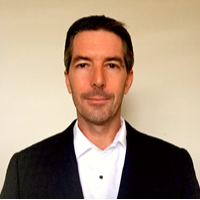
We recently sat down with Gareth Sipple-Asher CMgr MIML to chat about what it means to become a Chartered Manager. Sipple-Asher received the designation through IML ANZ’s Pathway Partnership with Griffith University. In this interview, he reflects on his journey, shares lessons learned and provides advice for others on the pathway to becoming Chartered.
The key learning for me is the significance of our commitment to the profession of leadership. Our conduct and the way we treat people, be they colleagues or those under our care, demonstrates our level of commitment to the wider community. If our ethical values hold no substance and we choose to flaunt them as a way of building superficial trust or recognition, then our core values are built on a lie that will eventually be discovered. If we build our values around an agreed code of conduct, as leaders, we instil a sense of personal responsibility and accountability across our community and with it a strong sense of cultural awareness.
The process helped me to understand the value of committing to the CPD. We often have good intentions when considering our personal development. Unfortunately, the responsibilities we have outside of our personal growth give us an excuse to keep putting it off. I have realised a vast resource that offers an abundance of knowledge at my fingertips. All that is required is a personal commitment to continued learning as a perpetual student of leadership.
I strongly believe the offer to become a Chartered Manager through Griffith provides the vital link that seeks to align hard and soft leadership skills. Becoming Chartered for me is not a badge or a membership, it’s a commitment to uphold a code of conduct that underpins sustainable leadership. Griffith University actively promotes the commercial value behind environmental sustainability. By offering MBA students the chance to become Chartered, Griffith University is also promoting the commercial advantage of sustainable leadership.
The opportunity to become Chartered does not only apply to individuals in leadership roles. Positive cultural change can take many forms. Effective leadership relies on the conversion of early adopters to take up a cause and build its value from within. Chartered Managers who form part of the stakeholder community and live the values through their commitment to the charter are as valuable to the organisation as the leaders above them.
Having the confidence and resolve to call out toxic leadership or unethical behaviour is the ultimate way to manage up and ensure those in charge are held accountable to the values of the organisation. Becoming Chartered will not only help you as a leader, but it will also offer a distinct advantage to your capability as a professional.
If you’d like to find out more about how IML ANZ can support you to include the internationally recognised Chartered Manager designation as part of your curriculum, please contact our Higher Education partnership team at partnership@managersandleaders.com.au.

By Dr Simon Burgess
As a leader, what are the most essential qualities to possess in times of crisis? Credibility, determination, a reassuring presence, and adaptability all come to mind. After all, your team members want you to be straight with them. They want to retain a sense of purpose, and they want to be able to have confidence in you. If they don’t get clear and credible information from you, they’ll be sure to disengage and get what they want elsewhere.
Now the truth is that all of that applies at any time. Like many fundamental insights about leadership, it can be worth bearing in mind regardless of whether things are chaotic or calm. But in any case, let’s consider a couple of ethical virtues that are perhaps especially relevant in times of crisis. One of these is empathy. The other is principled integrity. Both are vital in maintaining trust during trying times.
In some ways, leading through the current coronavirus pandemic is akin to the situation faced by business and civic leaders in New York following the terrorist attacks on September 11, 2001. While the carnage was both horrifying and bewildering, clearly those leaders weren’t responsible for any of it. Their responsibilities were entirely concerned with how best to respond. And virtually without exception, the people they led were immediately ready and willing to accept all the guidance that their leaders were able to provide. Rudy Guiliani, in particular, the mayor of New York at the time, is rightly admired for the empathic role that he performed.
Admittedly, Guiliani has never been universally admired. Moreover, his reputation has taken several serious turns for the worse since he joined the Trump administration. But without pretending that Guiliani has ever been perfect (and no leader is), let’s try to remember the kind of empathic leadership style that he showed back in 2001.
Importantly, his empathy wasn’t mere sentimentality. He didn’t cry in public or put his emotions on display. In fact, in his book Leadership, he explains that “there was no time to spend actually experiencing an emotion. There were moments of anger, fear, and sorrow, but with so much to do it was impossible to dwell on those feelings.”
But Guiliani clearly was emotionally ‘tuned in’ with those around him. He listened to the experts, and his emotional intelligence was central to the open, adaptable, and sure-footed leadership that he provided. His empathy also went hand-in-hand with his confidence that all kinds of people would rise to the occasion, and when we recognise a leader’s empathy in that form, it naturally brings out the best in us. Notwithstanding the shock and grief that were so widely shared, that empathic style actually raises morale and generates a sense of resilience, fortitude, and purpose.
Without a doubt, something that many organisational leaders will have been quietly contemplating in recent months is the idea that one ‘should never let a good crisis go to waste.’ It’s an idea that has been most avidly promoted in recent years by Rahm Emanuel, former Chicago mayor and President Obama’s first chief of staff. And admittedly, it’s an idea that can be very tempting. When a crisis that isn’t of your own making comes along, it is often possible to exploit it. Put simply, you can use it as a pretext for something that you’ve long wanted to do (whether it be related to structure, strategy, policy or personnel) but for which you have never been able to gain support.
Crises need to be addressed squarely, decisively, and sometimes with radical action. But even in a state of crisis, our actions should be principled. They should always be based on a genuine rationale; one that can be defended with honesty and candour. If your organisation needs a restructure, argue for a restructure. If you want to reassign certain personnel, give honest reasons for your view. But if your supposed need for such changes isn’t genuinely due to the current crisis, don’t pretend that it is. Understanding the context is one thing. Exploiting it as a pretext is quite another.
Simon Burgess is a lecturer in Ethical Leadership at the University of New England Armidale.

By Greg Smith
Soft skills have long been a desired leadership capability. However, in an age where rapid advances in technology are redefining how humans add value in the workplace, soft skills will increasingly become the most sought after employee capability possibly eclipsing everything else. Our current situation with the COVID-19 pandemic has thrust us into the new reality right now. And that’s just the beginning. Deloitte’s 2019 study, The path to prosperity. Why the future of work is human, predicts that by 2030 around two-thirds of jobs will be ‘soft-skill intensive’.
Sometimes when change is so rapid, it can feel like a high-speed train bearing down, and the immediate inclination is to jump out of the way. However, the best response is to understand, embrace and run with it!
Let’s see what that practically means when it comes to soft skills and the workplace.
How many times have you overheard one person saying this to another: “My
boss is really great technically but has terrible interpersonal skills.”? This is still a major deficit for some
leaders and continues to frustrate the growth and progress of individuals,
teams and entire organisations.
Leadership development programs, for some time now, have sought to improve
leaders’ ability to better connect with others. However, this remains an
elusive skill for many. Dial up the need for this capability many times over,
and it doesn’t require much of a stretch of the imagination to see why this
will become an absolute requisite and priority for effective leadership.
The notion of soft skills also implies the existence of hard skills. So what are soft skills, and how are they different from hard skills? Let’s first take a look at the sources of soft skills. These are found in personality traits, personal attributes and specific behavioural competencies. Hard skills, on the other hand, are developed through training and learning. It’s easy to see from this comparison why the nature of soft skills makes them much more difficult to impart to others than hard skills! The exciting aspect of soft skills is that they are highly transferable, which in a fast-changing employment landscape driven by technological change, makes them an extremely valuable asset and powerful differentiator when competing for jobs.
Fortunately, the concept of Emotional Intelligence (EQ) harnesses the key suite of soft skill capabilities required by leaders and their followers alike. Simply put, EQ may be thought of as not letting your emotions stop you achieving your goals. Although this descriptor neatly packages up EQ into a simple and easy to grasp idea; it doesn’t help with understanding how to develop and enhance your EQ capability.
Daniel Goleman described EQ competencies as “how leaders handle themselves and their relationships” in his book, The New Leaders. He explains EQ competencies in two domains:
It’s immediately apparent that EQ competencies cannot be ‘codified’ or automated and therefore replicated by AI or machines, making them solely the domain of human beings. However, if AI and machines take over routine tasks (e.g. technical support, bricklayers or administration) then non-routine roles (e.g. social workers, emergency workers, teachers or chief executives) become a natural place for humans to gravitate towards, an essential transition for secure employment in the longer term.
There are three key steps to navigate and take advantage of the wide array of exciting roles that will open up as a result of technological change. These are:
Step 1: understand and internalise the new reality of the transition that’s afoot showing where human beings will add value in the workplace of the future. It’s just around the corner, so it’s worthwhile considering how this may impact your career in terms of risks but more importantly opportunities.
Step 2: reflect on where and how you add value now in your current work role.
Step 3: identify your transferrable skills and consider how you might align these to the jobs of the future. This includes exploring what further training and development you may need to optimise these skills fully.
It’s highly likely that you could be drawing on soft skills to drive your future career even if you don’t use or need these skills in your job right now. My advice is to start preparing now for the future that lies ahead. The future is sure to be full of boundless possibilities as new jobs unfold that have not yet been invented or even conceived!
Greg Smith is an expert in career development, talent management and organisational leadership. He is the author of Career Conversations: How to get the best from your talent pool (Wiley).

When we are all surrounded by so much uncertainty, it helps to find someone we can trust.
From a professional perspective, a mentor can be just that – someone who has our best interest at heart. Although a manager might seem the best placed to provide work-related advice, sometimes it helps to get a different view of things.
As the University of Melbourne’s Mobile Learning Business Manager, Edwina Coller AFIML explains, “There are often areas that mentees don’t want to discuss with their manager because it’s about them personally and not relevant to their role.”
During these tough times, we are all inundated with things that have changed, that we aren’t sure of and things that cause us to be fearful. We may not be comfortable discussing those things with our manager.
Surviving through difficult circumstances can take a toll on our ability to think and make decisions. That’s why Onno Van Es FIML, Manager HR Strategy and Engagement at Mackay Hospital and Health Service, makes sure his mentees are clear about how the mentoring process can benefit them.
“My style of mentoring is based around adult learning principles. It’s not a lecture style of learning, where I provide all the answers. Rather, I focus on the mentee taking ownership of their learning by being internally motivated and self-directed,” says Van Es.
Whether you are looking for new perspectives, want a sounding board you can trust or simply need to expand your social and professional connections, mentoring can help you.
IML ANZ Members enjoy complimentary access to the Member Exchange mentoring program.
Now is your chance to give and gain support from other managers and leaders during this extraordinary period. A new mentoring cohort starts in mid-May. To take part, register here before 24 April.

In an opinion piece for the Sydney Morning Herald, Jim Bright, professor of career education and development at ACU, discussed how to get ahead in your career and leadership. Bright states, “If you want to get ahead, work with what is in front of you, not what you think should be in front of you. Great leaders are great improvisers in the sense that they make do… with whatever is at their disposal”.
Indeed, it can be so easy to blame others or external circumstances for your situation – but leaders are decisive and get on with it regardless of the situation. They take limitations and turn them into opportunities to innovate and collaborate.
That’s why having the right tools or resources at hand matters. Depending on the situation you face, there is a wealth of materials leaders can draw upon to help them tackle the challenges.
Bright also discussed the need to surround yourself with “people who care enough to be critical in a positive way”. If leaders only surround themselves with “yes” people, a toxic environment can result as colleagues and staff resent the narrow view and are frustrated with their own inability to make changes. The “yes” people can be reasonably safe, but only for so long. Good leaders need people they can trust, who keep them honest, question, critique and explore opportunities.
Effective leaders need to have a vision, but the vision is limited if it can’t be communicated effectively. Effective leaders are hard on themselves in a way that creates growth rather than destruction. Effective leaders are flexible and adaptable enough to seek solutions to challenges and strong enough to hold their vision and include others in their successes.
As a leader, it’s very important to have a grounded assessment of your strengths and areas of challenge. There are many psychometric tools available and if used as a tool, rather than a prescription, are very effective to know what strengths you play to and where your areas of growth could be. The list below is just a sample of what’s available – all have similarities and it’s really a matter of personal preference, access and cost.
There is a huge spectrum of leadership books on the market. The following list is a small introduction to get you thinking about different leadership elements and approaches.

In the hustle of the modern workplace, it’s very easy to spend a lot of time completing not much. That is, people put a lot of time and effort into completing the least important jobs, while the things that really matter are overlooked or not given the attention they deserve.
Sometimes this is because we prefer to work on things that interest us, or we do the easy quick tasks because it is so satisfying to look at a list of completed jobs. Frequently, however, it is because we have not properly identified and prioritised what we should be doing.
So, what are the demands on your time? What techniques do you currently use to manage your time effectively? What tools can you use to help schedule tasks? How can technology help you prioritise?
Below are some guidelines to get you thinking about how to effectively prioritise your tasks and manage your time:
Most peoples’ days are so busy that they find it impossible to do everything. It is essential to decide what you will deal with now, do later, delegate, do only if time permits, and what you won’t do at all. This can help you develop a work schedule and set priorities that concentrate on activities that will contribute directly to your overall job goals. It allows you to distinguish between what’s important and unimportant, what’s vital and superfluous.
In summary, the five Ds:
A lot of people use a to-do list but how effective and methodical is yours? No matter how good your memory is you’re probably far too busy to remember everything you need to do. Lists are indispensable to keep you focused on what you need to accomplish to achieve your goals, no matter how hectic things get. They save you from the ‘tyranny of the urgent’ – attending to whatever floats across your field of vision, whatever seems the most urgent at the time, or whatever ‘makes the most noise’.
Here are some specific things that to-do lists can be useful for:
The A-B-C method can be an effective way to set priorities. Look at your tasks, identify the important ones, those that most directly contribute to achieving results in your key result areas. Assign them an ‘A’ priority. Matters that are both urgent and important are ‘A’ priorities too.
Which tasks contribute least and can wait if you don’t have enough time to do them? These are activities that don’t contribute directly to your key result areas and are not urgent. Assign them a ‘C’ priority. The rest are ‘B’ priorities.
Try to get through as much of your to-do list each day as you can, focusing on your ‘A’ priorities. That way, if you don’t get everything done, it will be the least important things that are left. Don’t ignore the ‘Bs’ and ‘Cs’ though because many of them will be urgent ‘As’ if you don’t get on with them.
If someone calls at a bad time, say so and arrange a time when it will be convenient for you both to talk.
To prevent lengthy calls, stand up. Your voice will take on a more urgent tone and encourage callers to be to the point.
Make several outgoing calls together and have a note of what you want to discuss.
Keep a note of what you want to speak to people about as well as a note of telephone messages you leave for others on your to-do list. Cross their names off when they return your call and follow up anyone who doesn’t get back to you.
Where possible control your emails by turning off the audio alert that announces new mail and check for new mail only when it’s convenient to do so in blocks of time.
Remove your name from distribution lists that send information you seldom have time to read.
Scan emails for priority and subject titles and read only the most important; delete the unimportant ones. Pop the rest into folders to read or action. Keep culling and filing read and sent emails, so the size of your files doesn’t build up to unmanageable proportions.
Effective time-management primarily depends on personal discipline and willpower; planning tools can help you win that daily battle with time.
We are working in a modern workplace, with modern productivity issues. That means we need to resolve these issues with modern tools and approaches to productivity. Your team might all use the electronic calendar to manage their meetings, but that is only half of their workload. Most may still be using paper tools to manage their priorities, meeting notes and project information. Lead by example here and fully embrace technology to centralise and organise all of your work.
Here are a few additional guidelines to get you thinking about how to make the best use of diaries and calendars: