Adjunct Professor Cyril Jankoff talks about why developing an entrepreneurial mindset is an essential skill for managers and leaders to overcome volatility.
Continue reading
Adjunct Professor Cyril Jankoff talks about why developing an entrepreneurial mindset is an essential skill for managers and leaders to overcome volatility.
Continue reading
Director of Viska Lawyers & Advisors, Solomon Shuyang Li CMgr FIML, shares lessons learned from founding his own law practice and serving on boards at a young age.
Continue reading
Managing Director of Equity Partners, Jonathon Drumm AFIML shares his expert advice on how to survive the growth of your small business.
Continue reading
Negotiation seems daunting, but we’ve been at it from a very early age. We negotiate with our parents and siblings as we grow up. Another vital point about negotiation is that it is a skill that we can learn and master.
Continue reading
Every student’s goal when completing higher education is to increase their employability. But the reality for many is that the highly competitive job market puts students at a disadvantage. Find out why this is the case and what can be done to close the employability gap.
Continue reading
His name is Seth, he’s been dubbed the King of Marketing by Forbes, and he cooks for his family every night.
He is Seth Godin, author of 19 bestsellers, including Linchpin, Permission Marketing and Purple Cow.
His daily blog has a readership in the millions.
Ahead of his virtual workshop in May 2020, the Marketing Hall of Fame inductee spoke with IML ANZ partner, The Growth Faculty. Godin shared lessons from his latest book, the #1 Wall Street Journal Bestseller and instant New York Times bestseller This is Marketing, and some fascinating personal tidbits about himself.
Empathy is all that is available to us (marketers) if we seek to change someone else. They don’t see what we see, or know what we know. We need to earn enrolment “I’m going over there, do you want to come?”
Begin with a hurdle you can leap. You have no chance of changing everyone. Begin with the smallest viable market. Understand their worldview. Use psychographics, what they believe in, not demographics.
Your followers will tell others. If the small group that you seek to serve believes in you, and trusts you, then they will tell the others (if it raises their status to tell others about you).
There is no impact unless you change someone. A lot of people in marketing say that they do their job, and run ads. I ask them, ‘What change are you seeking to make?’. ‘Oh, I’m not changing anyone,’ they say. So, I ask, ‘Then, why are you wasting my time?’. No change, no marketing.
You can’t be seen until you learn to see. Do your customers feel you see them? Every brand, every marketer makes hard decisions all the time. Are you erring on the side of looking at your banker, or looking at your customer?
Authenticity is nonsense. An authentically bad surfboard? That’s not what I want. I want consistency. I want professionalism. Add that to empathy, and you get a promise of x, y, and z. I see your fears and desires.
The marketer is the CEO, the head of customer service, she’s the supply chain. If you’re interacting with me, you are marketing. Marketing is more about doing and action, now more than ever people are buying on reputation and proof.
A brand is not a logo. Think about a logo you admire, it will be a brand you admire. A logo is a symbol. A brand is a promise. If Nike opened a hotel, you would know what it looked like, if Hyatt had a brand of sneaker you would have no idea what it would be like. Hyatt has a logo, not a brand.
Direct marketing should be measured. Conversely, brand marketing is spending the money on the prayer, the hope, the belief, that it will change someone over time. If you spend money on FB for branding, stop the measuring, don’t measure the clicks.
In every (Adwords) auction that is taking place, Google keeps 95% of the money. You do the work, take the risk, yet Google makes the bulk of the money. You need to do something unique and different, so people search for you by name.
Status is super important. If you’re a hairdresser, you’re not selling a haircut, you’re selling an improvement in a person’s status. Marketers need to be asking ‘Am I raising the status, keeping it the same, lowering it?’
Daily practises for marketers should include strategic thought. How are you serving them, how are you earning their trust? Writing a blog every day for 17 years earns people trust. Your daily practise might be making 5 phone calls today to your best customers saying ‘How’s it going, are you in a jam, how can I help?’
IML ANZ is delighted to partner with The Growth Faculty to bring you The Leadership Circle with Seth Godin.
This is a rare opportunity for leaders and their teams to learn from this best-selling author and leadership titan. Our IML ANZ community enjoy an exclusive discount to Seth’s 3.5 hour interactive virtual workshop.
Save 40% on tickets when you book here.

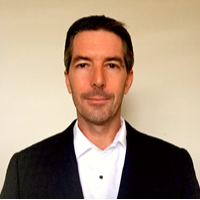
We recently sat down with Gareth Sipple-Asher CMgr MIML to chat about what it means to become a Chartered Manager. Sipple-Asher received the designation through IML ANZ’s Pathway Partnership with Griffith University. In this interview, he reflects on his journey, shares lessons learned and provides advice for others on the pathway to becoming Chartered.
The key learning for me is the significance of our commitment to the profession of leadership. Our conduct and the way we treat people, be they colleagues or those under our care, demonstrates our level of commitment to the wider community. If our ethical values hold no substance and we choose to flaunt them as a way of building superficial trust or recognition, then our core values are built on a lie that will eventually be discovered. If we build our values around an agreed code of conduct, as leaders, we instil a sense of personal responsibility and accountability across our community and with it a strong sense of cultural awareness.
The process helped me to understand the value of committing to the CPD. We often have good intentions when considering our personal development. Unfortunately, the responsibilities we have outside of our personal growth give us an excuse to keep putting it off. I have realised a vast resource that offers an abundance of knowledge at my fingertips. All that is required is a personal commitment to continued learning as a perpetual student of leadership.
I strongly believe the offer to become a Chartered Manager through Griffith provides the vital link that seeks to align hard and soft leadership skills. Becoming Chartered for me is not a badge or a membership, it’s a commitment to uphold a code of conduct that underpins sustainable leadership. Griffith University actively promotes the commercial value behind environmental sustainability. By offering MBA students the chance to become Chartered, Griffith University is also promoting the commercial advantage of sustainable leadership.
The opportunity to become Chartered does not only apply to individuals in leadership roles. Positive cultural change can take many forms. Effective leadership relies on the conversion of early adopters to take up a cause and build its value from within. Chartered Managers who form part of the stakeholder community and live the values through their commitment to the charter are as valuable to the organisation as the leaders above them.
Having the confidence and resolve to call out toxic leadership or unethical behaviour is the ultimate way to manage up and ensure those in charge are held accountable to the values of the organisation. Becoming Chartered will not only help you as a leader, but it will also offer a distinct advantage to your capability as a professional.
If you’d like to find out more about how IML ANZ can support you to include the internationally recognised Chartered Manager designation as part of your curriculum, please contact our Higher Education partnership team at partnership@managersandleaders.com.au.

Our world is rapidly changing. A growing and increasingly diverse population, climate change, technological advancement and cyber risks – these are just some of the factors leaders must face now and increasingly in the future.
Leaders’ success will rest in the plans they have put in place to respond to factors, both known and unknown. More than ever, leaders need intent. You cannot rely on the off chance that the solutions will land in front of you. Sound leadership doesn’t happen by accident.
In response to the many leadership challenges that we anticipate the future will bring, IML ANZ introduced the Intentional Leadership Series. It featured three thought-provoking events held across New Zealand that provided leadership insights into future-focused topics.
Discussions ranged from how to overcome future challenges, how to adapt, thrive and lead in a rapidly changing world, to top tips for inclusive leadership. Three experts spoke about their experiences, insights and advice on intentional leadership with a future focus.
Here are some of the highlights:
Change, more change and climate change
 In Auckland, we invited thought-leader and advocate for diversity, equality and sustainability, Rob Campbell, for a glimpse of what the future could look like for leaders in New Zealand. Importantly, Campbell took us on a journey through some of his personal leadership experiences and how these can help all leaders face the challenges to come.
Campbell pointed out that the old principles which underpin the way we do business are shifting. Short-term profits and shareholder interests no longer come first. Governments, social organisations, business communities and even investors are shifting their focus and responsibility to a wider range of interests.
However, he warned, that while our current legal, hierarchical and incentive structures remain intact, we cannot rely on leaders to drive change. This, Campbell declared, was utopian.
Finally, Campbell emphasised that the greatest challenge to leaders, not just in New Zealand but globally, is climate change. Speaking in advance of the historic passing of the Zero Carbon Bill, Campbell directed focus to the following issues:
All are vital questions that leaders must address.
Campbell ends with optimism and believes that the solutions rest within the business community. He roused listeners not to stand aside or resist. Rather, be engaged and positive about their leadership roles.
Courage in the face of change
 Opening with some amazing facts about how technology is changing the way we live and lead, Kaila Colbin, CEO of Boma New Zealand provided an inspiring and eye-opening session in Christchurch.
For Colbin, the positive social impact made possible by the massive technological changes we are witnessing today – including the ability to mass-produce essential goods such as food and power affordably – is not a given. It is a choice.
Leaders, therefore, need the courage to keep making choices that improve our world in the face of widespread change. Colbin cautioned that a lack of courage among leaders can result in:
Informed by the research of best-selling author Dr Brené Brown, Colbin highlighted how courage is the most important attribute for leaders facing change. In part, because change brings about the need to have incredibly uncomfortable conversations. Those might include conversations around:
When considering the optimisation of technological advancements, Colbin advised leaders not to first ask “can we”, but rather “should we”. This takes courage. Indeed, because leaders who make values-based decisions initially appear as ones who fly in the face of business norms. Later, once momentum gathers, these same mavericks are often heralded as game-changers.
In closing, Colbin reminded leaders that the world we desire requires courage – and she asked, “What are you going to do?”
Inclusive is not elusive
 When it comes to inclusive leadership, we went direct to the authority on the matter Dr Jo Cribb, former Chief Executive of the Ministry for Women.
Cribb challenged listeners, at her session in Wellington, to step out of their comfort zones. She emphasised how vital it is to not only invite different voices to the table – but to make them feel welcome and comfortable in order to truly harness their value. According to Cribb, leaders must embrace conflict and tough conversations instead of seeking support and affirmation.
She also admits that creating truly inclusive teams is not easy. It takes time and effort, something not all leaders may have the commitment or determination to accommodate. However, Cribb points out that inclusive is not elusive. She listed ten tips for leaders:
The session concluded with a thoughtful discussion with the audience. Cribb provided further advice on how to succeed in creating an inclusive team and workforce. She also cautioned that the aim to become inclusive must be hard-wired into your organisation’s DNA. If there is no business rationale to do it, your efforts are likely to fail.
Ultimately, Cribb reminded everyone present that inclusiveness comes down to your own behaviour – and it need not cost a lot.
It was a truly insightful and engaging series of events. Stay tuned for more events from IML ANZ.

By Peter Cullen FIML
Whilst facilitating, I often see a lot of blank faces when I ask the question ‘How do you know if you are behaving ethically in your workplace?’
These blank faces reflect the fact that ethical behaviour is not promoted or alive in many workplaces. This can expose organisations to all kinds of problems, leading to legal ramifications or worse. The intentional disregard for ethics by some led to the recent Royal Commission into Misconduct in the Banking, Superannuation and Financial Services Industry whose findings rocked the sector and shocked people from all walks of life across Australia.
Ethics is a very broad subject. In Australia alone, there are more than 20 bachelor’s degrees offered in the subject. One of the many topics covered in a degree is business ethics. This represents the practices that any individual or group exhibits within an organisation that can positively or negatively affect the business’s core values. It applies to all aspects of business conduct and is relevant to the conduct of individuals and entire organisations.
There is also the question of morals when discussing ethics. Morals refer to an individual’s personal principles regarding what is right and what is wrong. It is very easy for a person’s personal principles to guide their behaviour rather than adhering to business ethics. There can also be personal conflict between the two, making some situations even more difficult for individuals.
Unethical behaviour by leaders can lead to catastrophic outcomes for an organisation. Widespread and continuous unethical behaviour by staff can cause untold damage to culture and reputation.
The downfall of Enron in 2001 is a classic example. It led to the imprisonment of several of its senior leadership group and destroyed one of the world’s largest audit firms Arthur Andersen. Charges laid on the senior leaders included manipulating accounting rules, money laundering, bank fraud, insider trading and conspiracy.
A quick question: Do you know your organisation’s core values, code of conduct, policies, procedures, processes and systems and do you live them in your workplace?
If you do, congratulations. If you don’t or are unsure, you have some work to do because those values probably define the ethical expectations in your workplace. In addition to the values, there is also legislation such as the Fair Work Act, Work Health and Safety Act and others. A great place to start if you are unsure about any of these is to speak to your human resources team.
There are many benefits when all employees from top to bottom are behaving ethically. They include trust, honesty, integrity, transparency, consistency, fairness, improved decision making, productivity and many more. Ethical behaviour creates an environment where people feel safe to speak up and challenge unethical behaviour knowing they are supported by the organisation.
Every person in every organisation – whether large or small – is responsible for behaving ethically in the workplace. Leaders are role models and must lead the way with ethical behaviour. People will observe their leaders’ behaviours and whatever they do becomes permissible for others.
Become a role model for others by embracing and living ethics in the workplace.
Peter Cullen is an education and training facilitator. He conducts three-day programs that engage participants in developing and implementing their capabilities as managers and leaders.
This article originally appeared in the September 2019 print edition of Leadership Matters, IML ANZ’s quarterly magazine. For editorial suggestions and enquiries, please contact karyl.estrella@managersandleaders.com.au.