Five tips for playing the infinite game

Thanks to his blockbuster TED talks and bestselling books, Simon Sinek has become a well-known name in business leadership thinking. As a motivational speaker and leadership consultant he has challenged many leaders to reconsider the way they view business. He aims to continue doing that in his latest book, The Infinite Game.


PLAYING TILL GAME OVER

Sinek questions the validity of the mindset (and language) that prevails among many business leaders. They refer to ‘winning’, ‘being number one’ and ‘beating the competition’ as their ultimate business goal. This characterises what Sinek calls the finite game: with winners, losers and ultimately, an end to the game.


THE INFINITE GAME

The Infinite Game by Simon SinekHowever, Sinek posits that to make a significant impact, leaders need to adopt an infinite mindset – focussed not on achieving finite goals, but rather in strategically keeping yourself in the game. In an infinite game, players are both known and unknown and success is based on whether you are ahead or behind. It is the players who disappear, but the game keeps going.


In his new book, Simon Sinek outlines five ways that leaders can prosper in the infinite game:


1. HAVE A STRONG SENSE OF PURPOSE

Sinek warns leaders not to confuse ‘finite’ with ‘aimless’. Instead, he encourages leaders to strive for progress and momentum to keep propelling themselves and their organisations forward. And the way to move forward is to align all business activities to a strong sense of purpose. You don’t have to be a visionary or even have a unique vision, but you must devote your energy to something bigger than yourself. Sinek adds, “Every job you have should be contributing to the same vision.”


2. BUILD TRUST IN YOUR TEAMS

Leadership for Sinek is less like sport and more like parenting: “Leadership is not about being in charge. It’s about taking care of those in our charge. It’s a responsibility.” A perpetual view of the game helps leaders to understand the importance of empowering their teams to do their best. By becoming a nurturing and supportive leader to your teams, you’ll ensure they make it through the long haul as opposed to tapping out after a short sprint.


3. CHANGE YOUR VIEW OF COMPETITION

Shifting your mindset from ‘winning’ to ‘staying in play’ requires an adjustment in the way you view other players. Sinek recalls his short-sightedness when dealing with a rival. “His very existence revealed to me my weaknesses. And it was much easier to take that energy and put it against someone than it was to admit to myself that I’ve got some work to do”. In the infinite game, rivals must be seen as a means to identify areas for improvement, rather than someone to take down.


4. BE FLEXIBLE

Having existential flexibility means coming to terms with the fact that the game will continue, with or without you. An infinite mindset requires agility, and a willingness to pivot, letting go of long-held notions and ideas that no longer help you, your team or your business.


5. LEAD COURAGEOUSLY

“The courage to lead fundamentally means you’re willing to be open-minded, to consider that maybe, just maybe, the way you think the world works may be wrong… And just because everyone’s doing it, doesn’t mean it’s right,” says Sinek. Indeed, it takes real courage to choose people over profit, to challenge the status quo and to shift from a finite to an infinite mindset.


Book now. Tickets are selling out soon!

IML ANZ Members are invited to discover new leadership thinking at Simon Sinek Live – The Infinite Game.

Secure your tickets for:

Small business, huge climate impact

By Amy McShane

This year has certainly seen a shift when it comes to how businesses are approaching climate change. Recently, Qantas piloted the world’s first ever commercial flight with zero landfill. Paper straws are now commonplace in McDonald’s and 7-Eleven even offered free coffee to customers who brought their own reusable cup for a month.

But how can small businesses in rural areas – with less resources and less time than the big corporations – do their bit to tackle climate change? It was this very question that Jayne Thorpe CMgr MIML was asking herself last year.

And so her new business, Stablish, was born.

Stablish provides small businesses and not-for-profits with climate change business development services, grant and tender preparation and sustainability assessments.

“There’s so much business development work that you can put in to [grants and tenders] to make yourself more competitive,” says Thorpe. “I use this as a starting point to talk to businesses about their business plan, what their future is about and their supply chains. This translates over to sustainability assessments, so there’s a real overlap there.”

Innovation and positive change

It was the combined love for innovation and the earth that led the southern Queensland native to take the leap and self-fund her business.

Thorpe has been green fingered since her university days, with a Bachelor of Ecology and a Postgraduate Diploma in Ethnobotany from the University of Southern Queensland under her belt. She’s also a certified Environmental Practitioner and the current President of the Darling Downs Environment Council.

“Innovation to me is all about getting started with positive change to what’s happening now,” says Thorpe. “There are definitely changes that need to happen now around climate change, so they kind of tied up together. There’s lots of applications of innovation through all the work that I’ve done. So I was building on that, but offering it as a consultancy service.”

That previous work was done during her time at Condamine Alliance and Notomys Seeds and it was that experience that helped spark the inspiration: “When everybody is delivering current projects and services it can be quite difficult to figure out what innovations would be of benefit… so having someone look at those collectively was of really high value.”

Contributing to the local community

Thorpe is running Stablish along with her role at CatholicCare Social Services, where she works part time in business innovation. Having also run a habitat reconstruction business with her husband for the past 15 years, juggling different roles is something she is used to.

And it’s the impact on her community in Toowoomba that makes it all worth it.

“I was born here, worked here all of my career and went to university here,” says Thorpe. “It’s being able to recognise that I have something to offer that not everybody is across. Seeing people pick up on what I’m able to share and take things forward for their own business is very rewarding.”


This article originally appeared in the December 2019 print edition of Leadership Matters, IML ANZ’s exclusive Member’s magazine. For editorial suggestions and enquiries, please contact karyl.estrella@managersandleaders.com.au.

Six books featuring terrifying tales of fraud and corruption

By Tracey Mills

We have hand-picked six books that blow the lid off some of the biggest corruption scandals around the world. Check out these explosive must-read titles for all leaders and managers.

Banking Bad by Adele Ferguson

BANKING BAD

By Adele Ferguson

Banking Bad, tells the story of power imbalance, toxic culture and cover-ups in Australia’s banking industry. It describes the long fight for justice by whistleblowers, victims and political mavericks, and looks at the outcomes of the royal commission – the falls from grace, the damaging hubris, the scathing assessment of the regulators, and the colossal compensation bill.

Black Edge by Sheelah Kolhatkar

BLACK EDGE

By Sheelah Kolhatkar

Black Edge offers a revelatory look at the grey zone in which so much of Wall Street functions, and a window into the transformation of the worldwide economy. With meticulous reporting and powerful storytelling, this is a riveting, true-life legal thriller that takes readers inside the US government’s pursuit of Michael Cohen and his employees and raises urgent questions about the power and wealth of those who sit at the pinnacle of the financial world.

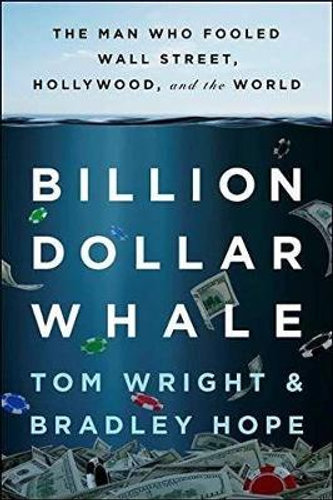
Billion Dollar Whale by Tom Wright and Bradley Hope

BILLION DOLLAR WHALE

By Bradley Hope and Tom Wright

In 2009, with the dust yet to settle on the global financial crisis, a fraud of unprecedented gall and magnitude was being set into motion. Now known as the 1MDB affair, the scandal would come to symbolise the next great threat to the global financial system.

A stunning true tale of hubris and greed, Billion Dollar Whale reveals how one of the biggest heists in history was pulled off – right under the nose of the global financial industry.

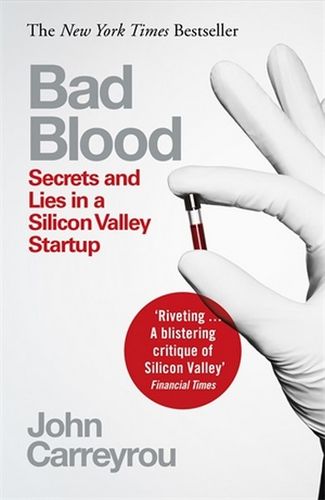
Bad Blood by John Carreyrou

BAD BLOOD

By John Carreyrou

In 2014, Theranos founder and CEO Elizabeth Holmes was widely seen as the female Steve Jobs: a brilliant Stanford dropout whose start-up ‘unicorn’ promised to revolutionise the medical industry. There was just one problem: the technology didn’t work. For years, Holmes had been misleading investors, officials, and her own employees.

In Bad Blood John Carreyrou tells the story of Theranos and encourages us to consider the possible repercussions of our blind faith in a small group of brilliant individuals.

He Who Must Be Obeid

HE WHO MUST BE OBEID

By Kate McClymont and Linton Besser

From the shadows, Eddie Obeid ran the state of New South Wales as his fiefdom, making and unmaking premiers. Along the way he pocketed tens of millions of dollars following corrupt deals.

Following their groundbreaking investigations, Kate McClymont and Linton Besser have unearthed the vast but secret empire Obeid built over decades, producing an authoritative account of how he got away with so much for so long.

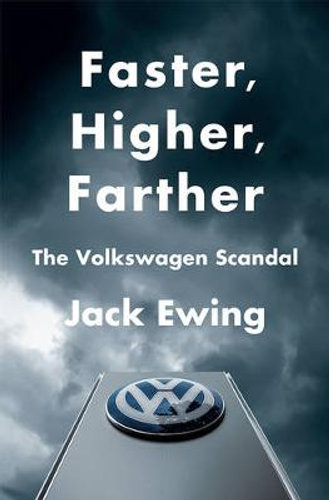
Faster Higher Farther by Jack Ewing

FASTER, HIGHER, FARTHER

By Jack Ewing

When news of Volkswagen’s clean diesel fraud first broke in September 2015, it sent shockwaves around the world. Overnight, the company long associated with quality, reliability and trust became a universal symbol of greed and deception. Consumers were outraged, investors panicked, and the company was facing bankruptcy.

As the future of one of the world’s biggest companies remains uncertain, this is the extraordinary story of Volkswagen’s downfall.


AVAILABLE FROM BOOKTOPIA

All these books are available at booktopia.com.au


Tracey Mills is the Head of Academic Books at Booktopia.

Is nudge management the key to overcoming change resistance?

Business and change are inextricable. But just because it’s common doesn’t mean successful business change is easy. As humans, we naturally resist the new and novel. We will fight or flee from anything unfamiliar, especially if it presents a considerable shift from what we know. However, recent studies reveal that small, subtle suggestions are making huge impacts in changing behaviours.


Effective, optional suggestions

A technique often attributed to making easier, faster, and simpler choices, nudging isn’t new.  We see examples of it every day. Your alarm is a nudge, so is the default renewal of subscriptions, even the ‘low fat’ labels on food are nudges.

The reason why nudges are effective relates to the fact that you are free to ‘follow’ the push or not. You have a choice. For example, GPS directions are a nudge, but how often do we stick to the exact route provided?

One of the most publicised examples of successful nudge management involves the reduction of fuel consumption by Virgin Atlantic pilots. In the aviation industry, pilots – particularly the captain – enjoy much autonomy when it comes to decisions that involve fuel and the flight. The experiment saw how nudges had an impact on the behaviour of captains. By simply informing the captains that their fuel consumption will be monitored and requesting them to report on their fuel performance, the airline saved $5.4 million in fuel.

Perhaps the experiment was highly effective since it avoided making fuel reduction a ‘mandatory’ requirement for pilots. Instead, it preserved the pilot’s sense of autonomy while making subtle suggestions about improving fuel consumption levels. The change didn’t seem out of their control.


Nudging the right way

So what about when it comes to managing change in the workplace? Can nudge management help? If we think about the top reasons for resisting change, nudge management does provide an ideal counter:

  • Fear of losing control: As demonstrated with the Virgin Atlantic experiment, the liberty-preserving aspect of nudges could make them an effective way to start changing behaviour.
  • Concerns about the unknown: The most effective nudges present a benefit upfront. You could suggest an action to simplify a process, help others make healthier choices or ensure their safety (as with speed limits, for example). No one enjoys coercion.
  • Insecurity over reputation: In some change scenarios, people may feel that the shift is occurring because they failed and were ineffective. One type of nudge – the use of social norms – can address this. By confirming that the majority of colleagues feel positive about change (or want to see change occur), that lifts the pressure on the people who may feel personally responsible.


While nudge management is a great tactic to use when implementing change, it’s prudent to remember that it is just one of many. Plus, the most successful examples of using nudges to influence change have involved ‘behavioural change’. Structural changes, for instance, may not be as adequately covered by nudge management.

Change is complex. Resistance is only one of the many challenges that accompany any shift from the norm. Every organisation, team and individual will face unique hurdles in their transformation journey. Great leaders will analyse the specific needs of their team or organisation and consider whether nudge management is a tool they can use.


Building trust in an age of disruption

By Dr Mathew Donald


The age of disruption may be characterised as an environment that is fast-paced, uncertain and risky. This new environment emerged from globalisation, aided by technology and trade interconnectivity, whilst facilitated by social media and the internet. A simple presidential tweet, or small change in a trade war is now transmitted instantly around the world, without necessarily any verification, analysis or investigation. This unfiltered and immediate nature of information may contribute to instability and confusion for staff and stakeholders. Leaders may not be able to control the external environment, yet through explanation, influence and engagement, leaders may be able to effectively reduce the stress and worry that results from disruption.


The interplay of trust and successful change

Leadership is influence. It can generate a willingness or inspiration to follow. Staff do not automatically listen and follow leaders irrespective of the environment, as they need trust as a precursor. If there is low trust in leaders, their messages may not be heard nor believed. It has long been recognised that trust is an element of leadership. Recent research now indicates that trust is also closely related to organisational change success. In a future disruption environment, change is likely to be constant and the need for trust is heightened, so future leaders will likely require excellent skills in communicating, explaining and involving staff in associated change.

Leaders set strategy, direction and plans to inform and influence their teams. The strategy and planning process is designed to signal a way forward, provide context and alignment across a whole array of staff and stakeholders. When new data and information emerge quickly, leaders could be under pressure to react to new advances, new information or developments. The risks in this scenario is where there is a high prospect of leaders regularly reversing and overriding past decisions. Reacting quickly may be just as risky as delaying decisions in disruption and the competition may react before accurate information or analysis emerges.


How disruption erodes trust

The changing nature of disruption creates new challenges as leaders will continue to attempt to build trust by delivering on past promises despite the change around them. Organisations will find it impossible to move forward if the leader is not able to ensure that they are believable and worth following. Imagine if a leader offers a pay rise, only to later discover that their cost of inputs has been altered significantly by a new tariff. Imagine a leader who announced a new acquisition but soon discovers that a new technology has completely eliminated the business value.  Sudden change that alters decisions are part of a disruptive world. So leaders of the future will need to explain changes, risk and uncertainty with their teams in order to prepare for disruption.


Leaders must be ready to respond

In an uncertain environment, leaders will need to explain the fast pace, the uncertainty and risk regularly. Failure to do this adequately will likely lead to staff confusion, or blame toward the leader for not controlling the situation. Staff will appreciate regular and open communication on disruption, even when they do not like the described environment. Communication is such an important part of leadership, a factor that is likely to be more important with constant change, so the new leader will need to be cognisant of various communication forms, language styles, formats and regularity. Leadership communication may even be so regular that staff may be included as partners or advisors, rather than merely as subordinates. Leaders will require efficient, effective and regular communication in order to build trust, those unable or unwilling to operate this way may fail to move an organisation forward with the speed required. The leader of the future will likely be comfortable in explaining the new environment and changes, whilst building teams that are resilient to multiple options and decisions despite any ongoing risk or uncertainty.


Dr Mathew Donald specialises in leadership, management and organisational change and has more than 35 years of business experience. He is the principal of Dr Mat – The organisational Health Doctor ™, available globally for consulting, mentoring and presentations. He is also the author of “Leading and managing change in the age of disruption and artificial intelligence” (Emerald $USD 100.00).

Effective change starts with failure

By Richard Shrapnel FIML


Because no one likes to fail, we’ve created many ‘feel-good’ sayings about it. However, most of us take these so-called clichés with a grain of salt. But in business, leaders must pay attention to their attitude toward failure – it could hold the key to success.

So, how does your business consider failure?


Non-compliance is not failure

Let’s define failure at the outset. Failure has nothing to do with non-compliance. And by non-compliance, I mean not upholding business values, policies, procedures – the set ways which everyone knows the business requires one to act. That’s not failure. That’s breaking the rules; and appropriate sanctions should be applied and enforced. Non-compliance is an issue of discipline, and all business must uphold discipline.

Failure is trying something new, untested, experimenting, stretching the business’s capability to a new level but not reaching the ‘hoped-for’ outcome.

I draw this distinction as many businesses around the world get caught up in not meeting appropriate standards, whether they be internal to the business or external through regulation and even customer expectations. These outcomes are often described as failures, where they are better-considered non-compliance.

Failure should be encouraged whereas, non-compliance should not be tolerated.


Failing forward

Success and profitability rely on a business’s ability to outcompete all others in its chosen marketplace. And that means being able to deliver greater value to customers than your competitors today and importantly tomorrow.

Stepping out, evolving, reinventing and creating are some of the descriptors I would use to flag the type of behaviours that a business must immerse itself in to be competitive. If a business simply continues with what worked in the past, then there will become a time when their customers’ needs and their competitors’ capabilities have all moved on, and they are left behind.

This ability to continually evolve requires the practice of trying, failing, retrying and continuing to learn from each step taken. Then incorporate those learnings into the value that you deliver to your customers.


Barriers to failing

There are many barriers that exist within a business that will prevent it from failing and taking those learnings forward, but they can all be traced back to the business’s attitude to failure.

In many businesses, failure is spelt ‘your fault’, and it is often swept under the carpet or passed around when it occurs. Such an attitude is anti-change and counter-growth. Everyone wants to be associated with the successful project, and no one had anything to do with the failure. Failure can be a source of fear – real fear – but should it be feared?

Material losses can be incurred by businesses where a fear of failure is prevalent. This fear seeds a blame culture leading to denial, no ownership, and a lack of oversight and accountability. Failures may well be hidden where fear is prevalent, and losses escalated rather than mitigated.

There can be no learnings where fear exists as no one will want to be associated with or recall the project nor its lessons.

So what attitude should a business seek to develop when it comes to failure. Well, there are, I believe, two aspects:

  • We are an innovative and growing business, so experimentation is part of who we must be.
  • Failures will occur and will be acknowledged with humility, acceptance and learning.


Honestly, doesn’t something only become a failure if you abandon all the learnings and hope for the future? The attitude you create and sustain in your business must uphold the right attitude towards failure. And do not allow failure to become a political tool within the business.


How leaders should handle failure

The way leaders act with respect to failure will set the role model for everyone else in the business to follow. Failure is a test of and testament to the character of leaders. How leaders handle their failures and those of fellow leaders and colleagues speaks volumes to their character and motive. You should listen carefully to what it says as it will identify the worthy leaders in your business.

Leaders will need to develop humility as a core character trait if they are to build a business that grows and can outcompete everyone else in their market. Humility is the character trait that allows you to listen and learn most effectively, and that is a trait you want in your business’s DNA.

The trait you do not want in your business is self-interest. Self-interest will undermine your individual and your business’s success. If you are always putting yourself first, then no one else will be uplifted, and that uplifting of others is essential for growth.

The right people, in the right places with the right attitude, is essential to the growth and enduring success of your business.

How your business views and approaches failure is a cornerstone to its ability to deliver greater value to your customers every day. Allow the wrong attitude to take hold, and your business will stagnate. Seed, feed and flourish the right attitude, and growth will never be an issue.


Richard Shrapnel is a business strategist, advisor and speaker. He is a Fellow of IML ANZ.

How intentional leadership prepares leaders for the future

Our world is rapidly changing. A growing and increasingly diverse population, climate change, technological advancement and cyber risks – these are just some of the factors leaders must face now and increasingly in the future.

Leaders’ success will rest in the plans they have put in place to respond to factors, both known and unknown. More than ever, leaders need intent. You cannot rely on the off chance that the solutions will land in front of you. Sound leadership doesn’t happen by accident.

In response to the many leadership challenges that we anticipate the future will bring, IML ANZ introduced the Intentional Leadership Series. It featured three thought-provoking events held across New Zealand that provided leadership insights into future-focused topics.

Discussions ranged from how to overcome future challenges, how to adapt, thrive and lead in a rapidly changing world, to top tips for inclusive leadership. Three experts spoke about their experiences, insights and advice on intentional leadership with a future focus.


Here are some of the highlights:


Change, more change and climate change

Rob CampbellIn Auckland, we invited thought-leader and advocate for diversity, equality and sustainability, Rob Campbell, for a glimpse of what the future could look like for leaders in New Zealand. Importantly, Campbell took us on a journey through some of his personal leadership experiences and how these can help all leaders face the challenges to come.

Campbell pointed out that the old principles which underpin the way we do business are shifting. Short-term profits and shareholder interests no longer come first. Governments, social organisations, business communities and even investors are shifting their focus and responsibility to a wider range of interests.

However, he warned, that while our current legal, hierarchical and incentive structures remain intact, we cannot rely on leaders to drive change. This, Campbell declared, was utopian.

Finally, Campbell emphasised that the greatest challenge to leaders, not just in New Zealand but globally, is climate change. Speaking in advance of the historic passing of the Zero Carbon Bill, Campbell directed focus to the following issues:


  • Will the transition to a zero net emissions economy happen fast enough to avoid the worst projected negative effects?
  • Is the cost of the transition manageable without destroying social cohesion?
  • Can we adapt to the new physical living standards that the transition will require?


All are vital questions that leaders must address.

Campbell ends with optimism and believes that the solutions rest within the business community. He roused listeners not to stand aside or resist. Rather, be engaged and positive about their leadership roles.


Courage in the face of change

Kaila ColbinOpening with some amazing facts about how technology is changing the way we live and lead, Kaila Colbin, CEO of Boma New Zealand provided an inspiring and eye-opening session in Christchurch.

For Colbin, the positive social impact made possible by the massive technological changes we are witnessing today – including the ability to mass-produce essential goods such as food and power affordably – is not a given. It is a choice.

Leaders, therefore, need the courage to keep making choices that improve our world in the face of widespread change. Colbin cautioned that a lack of courage among leaders can result in:

  • An inability to tackle tough conversations
  • An erosion of trust
  • A lack of diversity, inclusivity and equality
  • A culture of shame and blame


Informed by the research of best-selling author Dr Brené Brown, Colbin highlighted how courage is the most important attribute for leaders facing change. In part, because change brings about the need to have incredibly uncomfortable conversations. Those might include conversations around:

  • Technological unemployment – the loss of jobs due to technological advancements
  • Increased inequality – those who own the technology get richer but as productivity increases, salaries remain stagnant
  • Rise in cyber risks – when everything is connected, everything is at risk
  • Algorithm bias – exponential technology is governed by algorithms that may have inherited their creator’s biases and prejudices
  • Undermining of trust – technology such as ‘deepfakes’ make it easy to put words (or even actions) into another person’s mouth, in extremely realistic ways.


When considering the optimisation of technological advancements, Colbin advised leaders not to first ask “can we”, but rather “should we”. This takes courage. Indeed, because leaders who make values-based decisions initially appear as ones who fly in the face of business norms. Later, once momentum gathers, these same mavericks are often heralded as game-changers.

In closing, Colbin reminded leaders that the world we desire requires courage – and she asked, “What are you going to do?”


Inclusive is not elusive

Dr Jo CribbWhen it comes to inclusive leadership, we went direct to the authority on the matter Dr Jo Cribb, former Chief Executive of the Ministry for Women.

Cribb challenged listeners, at her session in Wellington, to step out of their comfort zones. She emphasised how vital it is to not only invite different voices to the table – but to make them feel welcome and comfortable in order to truly harness their value. According to Cribb, leaders must embrace conflict and tough conversations instead of seeking support and affirmation.

She also admits that creating truly inclusive teams is not easy. It takes time and effort, something not all leaders may have the commitment or determination to accommodate. However, Cribb points out that inclusive is not elusive. She listed ten tips for leaders:


  1. Conduct inclusive meetings: give everyone a say and implement a no interruption rule
  2. Seek out those you don’t agree with: pick people who are open to engaging, not arguing
  3. Widen your network: at networking events, chat to someone who doesn’t look like you
  4. Create small ripples: don’t underestimate the power of small actions, smile at people
  5. Recommend a variety of people: avoid only putting forward names of people within your ‘tribe’
  6. Be authentic: be honest and open both in your personal and professional life
  7. Check your actions: if you must work out of hours, avoid setting the expectation that your staff or colleagues must do the same
  8. Listen: open your mind and try to understand what people are telling you
  9. Listen again: if you ask a question, listen for the actual answer
  10. Listen some more


The session concluded with a thoughtful discussion with the audience. Cribb provided further advice on how to succeed in creating an inclusive team and workforce. She also cautioned that the aim to become inclusive must be hard-wired into your organisation’s DNA. If there is no business rationale to do it, your efforts are likely to fail.

Ultimately, Cribb reminded everyone present that inclusiveness comes down to your own behaviour – and it need not cost a lot.

It was a truly insightful and engaging series of events. Stay tuned for more events from IML ANZ.


3 Points of View: How can leaders pause to focus on long-term strategy?

In a busy world, how can leaders ensure they are setting aside time to focus on creating their strategy? Three Chartered Managers share their thoughts.


Jillian Ritherdon CMgr FIMLJillian Cable CMgr FIML

CEO and Company Secretary, Venture Housing Company


As someone who survived a close encounter with terrorists; lost a step-son in a preventable incident; and whose mother died of cancer at a young age; I know that life can be both very short and extremely arbitrary. So, above all, do what inspires you. As a very wise mentor once said to me: “If you lead a life of purpose, your job will be an inspirational journey”.

My practical tips are:

  • Delegate day-to-day tasks. This frees up your time for strategic thinking, helps develop your people, and assists succession planning.
  • Slowly handwriting my ‘to do’ lists on paper and prioritising tasks embeds them in my mind and stimulates thoughts in a way that typing does not. I then set up alerts in my electronic diary. Freed from the fear of forgetting an important deadline, my mind can relax and contemplate the ‘helicopter view’.
  • Self-care is important. Some of my best ideas have come during a massage, riding a horse or whilst mowing the lawn! Sometimes the mind needs to be in a non-work zone for the strategy to emerge.


Carol Sutton CMgr FIMLCarol Sutton CMgr FIML

Director, On The Business


It all starts with preparation and intention. Make sure you understand what your long-term vision and goals are – and be crystal clear on how you will know when you have achieved them. Then be bold and begin. Just as you would never dream of waiting to start a journey until every traffic light en route was green, you should accept that there will never be a time when all the business conditions are perfect. So get started! (See CE Lindblom’s papers on Muddling Through and Still Muddling, Not Yet Through for a useful and enjoyable read on this subject.)

Periodically schedule time to check in on your progress and be smart about when you schedule that. I’m a big advocate for active procrastination. Accept that you won’t always be in the right frame of mind to tackle strategy – and don’t feel bad about that. If you struggle to focus on the written word during the afternoon, try and organise meetings or schedule phone calls during that time. (Eisenhower’s decision matrix offers a great rule of thumb for how to spend your time effectively.)


Michael Coe CMgr FIMLMichael Coe CMgr FIML

Support Services Manager, Maritime Saab Australia


Taking time for reflection can easily be pushed aside due to day-to-day demands. In my experience timing is the key. Ideas can sometimes come from the most unlikely sources and at random times. Capturing these ideas, whether relevant or not at the time, is key to successful planning. This includes process/organisational changes, business opportunities or any other puzzle pieces that contribute to strategic planning. In this way, the time spent on reflection for strategy has more meaning and content.

It is easy to set high-level plans that remain dormant afterwards because they are prepared for representation rather than genuine change. It is pointless attending planning meetings with a blank sheet because that’s unlikely to achieve productive outcomes.

Big picture planning is easier with content. It can sometimes be more effective using a ‘bottom up’ approach rather than ‘top down’. Laying out the opportunities and ideas can make the strategic pathways more apparent. This makes the eff ort spent on reflection and planning worthwhile – delivering real outcomes – and therefore encouraging us to commit our time to it, either individually or collectively.


This article originally appeared in the June 2019 print edition of Leadership Matters, IML ANZ’s quarterly magazine. For editorial suggestions and enquiries, please contact karyl.estrella@managersandleaders.com.au.

Four ways psychology influences strong leadership

Young leader and registered psychologist, Rheza Tan CMgr MIML, lists how the mind impacts effective management.

1. MASTER THE LEADERSHIP MINDSET

When I studied business, I found that many leadership concepts are drawn from psychology or informed by the science. The two main lessons that I keep in mind are:

  • Look after people. Don’t just focus on the bottom line. If you look after your people, then they’ll do the same for you and your organisation.
  • Have meaning and purpose. As these are higher-level needs, once people meet their basic needs, they search for meaning and purpose. I found that leaders who share their sense of purpose with their staff and organisation support others in fulfilling their higher-level needs too.

2. CULTIVATE A POSITIVE VIEW

Although I was primarily trained to help people with diagnosed mental illness, when I became a manager I was drawn to positive psychology. It’s about assisting healthy people to increase their wellbeing and happiness. The focus is on enhancing the positive rather than eliminating the negative. When I dug deeper, I found that positive psychology, and business and executive coaching are becoming really intertwined. There’s a strong alignment between positive psychology and coaching. Leaders can use positive psychology models and apply those when helping their teams.

3. LISTEN TO THE UNHEARD

Both personally and professionally I’m drawn to assist those from a culturally and linguistically diverse background – including students, migrants and refugees. Regardless of where people come from, there’s always a struggle to adjust to a new culture. The greater issue they face is a lack of good mental health literacy. Many cultures don’t acknowledge mental health issues. In some, they don’t even have words to describe concepts like anxiety and depression. So it can be challenging for them to get support. As a migrant myself, I understand their experience. When they can speak to someone who understands, it really makes a huge difference.

4. DEVELOP AS A PROFESSIONAL AND AS A LEADER

Completing the Chartered Manager program was the first time I was exposed to a competency framework for leaders. Comparing myself against it was an excellent reflective process. I feel that it gave me an ongoing commitment to be competent as a professional leader. As Chartered Managers, we have a responsibility to uphold ethical business standards and a commitment to leadership development. I know many colleagues who are both health professionals and leaders. While they tend to continue clinical training, they don’t always develop their management knowledge or leadership skills in the same way. Now, I complete professional development for two disciplines – as a psychologist and as a leader.


This article originally appeared in the September 2019 print edition of Leadership Matters, IML ANZ’s quarterly magazine. For editorial suggestions and enquiries, please contact karyl.estrella@managersandleaders.com.au.