How can managers encourage open and honest feedback?

By Peter Cullen FIML


What are your first thoughts and feelings when someone comes up to you and mentions they would like to give you some feedback? Typically, our thoughts tend to sway towards the negative such as, “What have I done wrong?” or “Here we go again”. This could also be accompanied by feelings of anxiety, frustration or dread.

However, when we provide open and honest feedback, what we create is a sense of openness. Receiving feedback becomes an engaging and supportive process when what’s best for both parties is taken into consideration. It should be a positive and productive learning experience where improvement is required, and commendation provided. There should be no such thing as negative feedback.

A question I often ask during facilitation is, “How do you like to be asked to do something or receive feedback?” Typically, attendees say they prefer very clear communication with no ambiguity. All too often the recipient of the feedback feels uncomfortable and is left wondering what the purpose of the conversation really was. You can avoid this by keeping the following points in mind:


SET A CLEAR STRUCTURE

Clear expectations on the frequency and format of feedback meetings are essential. During feedback meetings, promote conversations that are open, honest and appropriately respectful. This applies for both one-on-one and team discussions. Use simple yet powerful questions during these meetings. Find out what is working well and why, then explore what can be improved and how. These feedback meetings may be scheduled or ad hoc.


WALK THE TALK

Role model the ideal behaviours of providing feedback to members of the team so they understand what it looks and feels like. Giving your time to people and being 100% present in the conversation can be very difficult when you have many priorities and time limits niggling away in the back of your brain. The discussion will not be taken seriously if you are distracted by emails, phones or other people. This is a quick way to lose respect and trust. Remember, whatever you do or say becomes permissible for others to do the same.


BUILD TRUST

A safe environment is created when mutual trust exists between people. Trust is established over time by our day-to-day behaviours in the workplace. When giving or receiving feedback, it’s important to stop, think and then respond rather than react. Other behaviours that help build trust include being calm, questioning rather than challenging, remaining patient and listening. If you are explaining why tough decisions had to be made, present it from a fact-based, business perspective.


STAY ON THE SAME PAGE

Seeking clarity is often overlooked, leading people to interpret the discussion differently from one another. To ensure everyone is on the same page, either restate what your understanding of the conversation is or ask the other person what their understanding of the discussion is. This will ensure any agreed actions are aligned with all parties involved. If a misunderstanding is identified at this stage, thank the other party for bringing it to your attention.


FOLLOW UP

Following up at agreed times on any decisions and actions is essential to ensure the desired outcomes are reached. This is also an opportunity to ensure you are on the right track and to reflect on the whole process.

When feedback is delivered in the right way at the right time, it is typically uplifting and motivating for everyone. If you want people to be honest with you, you need to be honest with them.


Peter Cullen is an education and training facilitator and Fellow of IML ANZ. He conducts three-day programs that engage participants in developing and implementing their capabilities as managers and leaders.


This article originally appeared in the December 2019 print edition of Leadership Matters, IML ANZ’s exclusive Member’s magazine. For editorial suggestions and enquiries, please contact karyl.estrella@managersandleaders.com.au.

The small changes leaders must make to drive real gender equality

Throughout history, commerce has always impacted society. Migration, import and export laws and even the creation of new social classes were all triggered by progress in business and trade.

Today, our society is slowly trying to reach a state of equality between men and women. Could this be an area where businesses can affect change?

There are hurdles. For example, StatsNZ reports that the gender pay gap in New Zealand sits at 9.3%. And while that has reduced significantly from 16% in 1998, the number has stalled in the past decade. Also, IML ANZ’s National Salary Survey report has seen a steady pay gap rise to almost 15% for leaders at the C-suite level.

Another area where businesses can do more is around performance assessments and recruitment.  Research has found that common rating scales used to assess work performance, could be skewed in favour of males. In addition, Australia’s Workplace Gender Equality Agency (WGEA) also reports that for many roles in various sectors, “women must send out substantially more applications to receive the same number of interview invitations as equally qualified men.”

Looking at it from that lens can make the goal of achieving equality appear monumental. But like all great tasks, it may be useful to focus on the elements that make up the larger goal – the smaller bites of the proverbial elephant.


Spearhead social change from within your business

Consider the recently enacted whistleblower protections under Australia’s Corporation’s Act. These amendments followed a recognition within the business community that those who speak up need protection. The reforms were a result of the private sector coming together to try and take steps to rebuild trust – an essential element for any business that wants to retain customers.

So, creating the change we need might be more accessible than you think. After all, the employee remuneration, performance ratings and recruitment are entirely normal, ordinary business activities that leaders can influence.

Little steps could be all it takes. Plus, these steps can be carried out by leaders in companies, both large and small. Some areas of change could include:

  • Ensuring equal pay for equal work through robust policies
  • Reviewing how performance assessments are carried out and removing
  • Adopting best practice in your recruitment process to avoid any gender bias


Push for equality to benefit all

The apparent business benefit of role modelling gender equality is that you’ll improve employee engagement and in turn, productivity. However, there are advantages beyond the company’s bottom line.

It is estimated that if the gender employment gap was closed, Australia’s GDP would rise by 11%. In New Zealand, pay and employment equity means the shortages of labour and skills will be addressed, labour markets will function better and which all feeds economic growth. Not to mention that the equal treatment of women in society would also lead to a reduction in community issues such as domestic violence and other anti-social behaviours.


Challenge your thinking through thoughtful discussions 

Making changes within your business can undoubtedly nudge us closer to real gender equity. But more is required than small moves. Mindsets need to shift, and real dialogue must happen.

Sources:

American Sociological Review: Scaling Down Inequality: Rating Scales, Gender Bias, and the Architecture of Evaluation: https://journals.sagepub.com/stoken/default+domain/10.1177%2F0003122419833601-free/full

Employment New Zealand: Gender pay gap: https://www.employment.govt.nz/hours-and-wages/pay/pay-equity/gender-pay-gap/

Ministry for Women: Gender pay gap:
https://women.govt.nz/work-skills/income/gender-pay-gap

Victorian Government: The benefits of gender equality: https://www.vic.gov.au/benefits-gender-equality

Five tips for successfully managing people

As told to Andy McLean MIML

In a leadership career spanning five decades, Chris Golis FIML has learned a thing or few about managing people. In this article, he shares five tips for a successful life and career.

1. ONE-ON-ONE MEETINGS MATTER

In 1973 I was flown twice to New York by McKinsey & Company and offered a job – but I must be one of only a few people to ever turn them down. My MBA tutor was Charles Handy [who later became a world-famous management guru] and he said to me, “Chris, I’m not sure I’d take that if I were you. I’ve been thinking about what makes business success and have come to the conclusion that it’s being able to handle yourself in a one-on-one meeting. That’s when you get the job, hire someone, get fired, secure the funding, come up with a business plan, and so on.” I took his advice and instead pursued a sales career. I arrived in Sydney the same week that the Sydney Opera House opened.

2. PEOPLE DRIVE PERFORMANCE, EMOTIONS DRIVE PEOPLE, TEMPERAMENT DRIVES EMOTIONS

In sales I learned that we sell to people’s heart, not to people’s head. Understanding someone’s temperament is absolutely vital if you want to get the best out of them. The problem is most managers do not have a scientifically valid model of temperament to help them determine their own and other people’s core emotions. I practise and teach the most practical temperament tool available, the 7MTF which can dramatically lift your emotional intelligence. In the same way the Humm-Wadsworth temperament model is built on the earlier work of Rosanoff, the 7MTF builds on the work done by Humm and Wadsworth. All three models conceive our temperament traits as based on one’s position on the various spectra of mental illnesses.

3. ABOVE ALL, PEOPLE SKILLS MATTER

In 2005, my elder daughter Louisa was asked to run a team of 30 people at Perpetual before she was 30. She asked me a good question: “Dad, you have read all the business books, what do you recommend I read?” I began by referring her to research among Australian managers that showed ‘people skills’ ranked as far and away the most important leadership capability. So I said to Louisa she should read a book that would improve her people skills. After some thought, I realised that there was no practical handbook written to help new managers develop their people skills so I decided that I had to write one myself. Thus The Humm Handbook: Lifting Your Level of Emotional Intelligence was born and published in 2007. (Read details of the book at emotionalintelligencecourse.com.)

4. LEADERS CAN LEARN A LOT FROM THE CLASSICS

At the end of my book, I analysed five classic plays as business case studies. Why? Because theatre gives us a picture of what we are and what we want to be. It helps us to find out about ourselves and others. So I analysed three Shakespeare plays, as well as Death of a Salesman and Antigone, through the prism of emotional intelligence. In each play, the hero suffers a terrible reversal of fortune and loses everything they hold most dear. We can see how their personality traits inform the decisions they make, and can draw business lessons from these to enhance our own emotional intelligence. (For more, read this article listing five leadership lessons from Shakespeare)

5. PRIORITISE WHAT IS MOST IMPORTANT TO YOU

I survived cancer in 2000, 2014 and 2019 (my daughters say I’m now a cat with six lives!). Facing your own mortality changes your outlook on life. When I realised there was a chance I was going to die, I decided to empower the people around me to let them make decisions. I loved my work in venture capitalism but also knew business life would one day have to continue without me. I also asked myself: “What do I want out of life?” In 2000, my wife and I drew up a bucket list of places we wanted to visit and, since then, we’ve been on two overseas trips every year.


Chris Golis FIML is the CEO and lead presenter at Emotional Intelligence Courses.

Andy McLean MIML is the Editorial Director of Leadership Matters magazine.


This article originally appeared in the December 2019 print edition of Leadership Matters, IML ANZ’s exclusive Member’s magazine. For editorial suggestions and enquiries, please contact karyl.estrella@managersandleaders.com.au.

Small business, huge climate impact

By Amy McShane

This year has certainly seen a shift when it comes to how businesses are approaching climate change. Recently, Qantas piloted the world’s first ever commercial flight with zero landfill. Paper straws are now commonplace in McDonald’s and 7-Eleven even offered free coffee to customers who brought their own reusable cup for a month.

But how can small businesses in rural areas – with less resources and less time than the big corporations – do their bit to tackle climate change? It was this very question that Jayne Thorpe CMgr MIML was asking herself last year.

And so her new business, Stablish, was born.

Stablish provides small businesses and not-for-profits with climate change business development services, grant and tender preparation and sustainability assessments.

“There’s so much business development work that you can put in to [grants and tenders] to make yourself more competitive,” says Thorpe. “I use this as a starting point to talk to businesses about their business plan, what their future is about and their supply chains. This translates over to sustainability assessments, so there’s a real overlap there.”

Innovation and positive change

It was the combined love for innovation and the earth that led the southern Queensland native to take the leap and self-fund her business.

Thorpe has been green fingered since her university days, with a Bachelor of Ecology and a Postgraduate Diploma in Ethnobotany from the University of Southern Queensland under her belt. She’s also a certified Environmental Practitioner and the current President of the Darling Downs Environment Council.

“Innovation to me is all about getting started with positive change to what’s happening now,” says Thorpe. “There are definitely changes that need to happen now around climate change, so they kind of tied up together. There’s lots of applications of innovation through all the work that I’ve done. So I was building on that, but offering it as a consultancy service.”

That previous work was done during her time at Condamine Alliance and Notomys Seeds and it was that experience that helped spark the inspiration: “When everybody is delivering current projects and services it can be quite difficult to figure out what innovations would be of benefit… so having someone look at those collectively was of really high value.”

Contributing to the local community

Thorpe is running Stablish along with her role at CatholicCare Social Services, where she works part time in business innovation. Having also run a habitat reconstruction business with her husband for the past 15 years, juggling different roles is something she is used to.

And it’s the impact on her community in Toowoomba that makes it all worth it.

“I was born here, worked here all of my career and went to university here,” says Thorpe. “It’s being able to recognise that I have something to offer that not everybody is across. Seeing people pick up on what I’m able to share and take things forward for their own business is very rewarding.”


This article originally appeared in the December 2019 print edition of Leadership Matters, IML ANZ’s exclusive Member’s magazine. For editorial suggestions and enquiries, please contact karyl.estrella@managersandleaders.com.au.

How Cricket Australia bounced back from defeat

By Anthony O’Brien


For many sports fans and members of the media, 24 March 2018 is a day that will forever live in infamy for Australian cricket.

To recap, Australia was playing a crucial test in Cape Town, South Africa, and the locals were on top. To try and stem the flow of runs, David Warner and Cameron Bancroft hatched a plan to use sandpaper on the red ball to help it swing. Simply put, a swinging cricket ball is harder to hit or can increase the chances of getting unwary batsmen out. The bottom line, whether you take sandpaper, dirt, or Brylcreem to a ball, is that it’s a form of cheating. In other words, it’s just not cricket.

After a couple of false starts, the game’s peak body Cricket Australia (CA) accepted the behaviour of Warner, Bancroft, and skipper Steve Smith, who appeared to condone the ball-tampering by his inaction, was unacceptable. The trio were given lengthy suspensions. Cricket Australia Chairman, David Peever said at the time, “The CA Board understands and shares the anger of fans and the broader Australian community about these events.”

CA CEO and former professional cricketer, Kevin Roberts, admits the national game found itself in this parlous predicament because, “cricket’s part of the fabric of our culture”. Roberts took over as the boss of Australian cricket in October 2018.

To provide some perspective about how important the red ball game is for Australians, Roberts compares the national cricket team, which is famous for its Baggy Green cricket cap, to the mighty All Blacks of New Zealand. “From a cultural perspective, cricket is a national sport just as rugby is New Zealand’s national sport.”

Before working in cricket full time, Roberts had about 20 years in sports sponsorship working with the likes of Adidas and Kiwi sportswear giant Canterbury. He continues, “When people see an example of the spirit of cricket not necessarily being demonstrated in the national sport that’s part of our nation’s culture, it becomes a big issue.”

The long and challenging journey that CA has travelled in the past two years offers a fascinating case study in organisational culture for leaders in all industries.


CRICKET AUSTRALIA’S RESPONSE TO CAPE TOWN

In April 2018, CA commissioned the Ethics Centre to conduct an independent review into cultural, organisational and governance issues in cricket following the Cape Town ball-tampering scandal. The evaluation aimed to establish a charter setting out standards for improved player behaviour and expectations of the Australian men’s national side.

The review featured a panel of past and present players including national test captains Tim Paine and Rachael Haynes, who was deputising for the legendary Meg Lanning. Others on the panel included former internationals Shane Watson and George Bailey, the world’s best fast bowler Pat Cummins and men’s team coach, Justin Langer. Also an Ethics Centre survey garnered responses from 450 CA executives and employees, current and former players, state and territory association staff, and representatives from sponsor and media organisations.

Running parallel to this process was an examination of team conduct contributing to the events in South Africa. There has been a perception among some sections of the community that the Baggy Greens were arrogant. However, the bubble created by regular test and cup wins tended to paper over the cracks.

Despite the community cynicism, CA has responded decisively to the Cape Town fiasco, which is a credit to the leadership of Roberts, who joined the CA Board in 2012 before switching to executive roles from 2015. Unenviably, Roberts was in the CEO’s chair when the Ethics Centre released its 145-page report outlining 42 recommendations for CA’s consideration. Roberts recalled, “By the time I came into the CEO role, it was time to release the findings, and more importantly to get cracking on its implementation.”

While there was a mixed response to the report’s release, what struck Roberts was, “how isolated incidents had affected people who were on the receiving end of it”. For instance, the report asserts, “We have (also) been told of groundsmen (who) have been required to prepare practice pitches – spending time and effort only to see an elite bowler send down only seven deliveries before reaching the mandated ‘quota’ – and therefore stopping.

“This kind of behaviour speaks of gross disrespect to those who are not natives of the ‘gilded bubble’.”

While that might be an isolated incident, Roberts determined to consider how people were affected, either positively or negatively, through their interactions with cricket. As a result, the new CEO and his team released a cultural change program focused across three categories – people, high performance, and leadership.


HARVARD CONTRIBUTES TO CRICKET LEADERSHIP

CA launched a leadership program in 2019, which is a tailored version of a world-leading program from Harvard University, explains Roberts. Around 40 executives, senior managers, Paine and limited-overs skipper Aaron Finch, as well as coaches took the program, and are now collaborating on developing CA’s leadership culture. “We’re on that journey together, which is fantastic,” Roberts said.

Additionally, CA established the Australian Cricket Leadership Team in late 2018. This group includes the CEOs of each of the state and territory cricket associations. “This team acknowledges that cricket operates through a federal structure as opposed to a corporate hierarchy, and it was about spreading the leadership through that broader cricket ecosystem.”

Since Cape Town there has been a significant turnover of CA’s executive team, including the notable resignation of long-term CEO James Sutherland. Former Hyundai executive Scott Grant joined the peak body as COO. Like Roberts, the new operations supremo is no cricket blowin, and moonlights as the president of Bankstown Cricket Club, where the famous Waugh twins played. Roberts, who also scored runs for Bankstown, said, “We’ve got Drew Ginn, the former member of the Oarsome Foursome [Olympic Games winning] rowing team. He’s working with the states and territories to develop the next generation of talent.” Also, Ben Oliver, who was working for the Western Australian Cricket Association, is now responsible for the national teams. “So, there’s been some development among our leaders themselves as well,” Roberts adds.


PITCHING THE MEDIA TENT

CA has put 100 managers through a cultural change program. “We’ve also identified the need to improve the nature of communication inside and outside the organisation,” Roberts said. This project includes establishing a new internal communications platform aimed at creating closer links throughout the organisation. CA has also implemented new forums for all staff to ask questions or raise issues directly with management, in a safe environment.

Additionally, Roberts and his team have improved communication with relevant stakeholders, such as the media. To this end, CA has increased media training for its leadership and players. “We are making an extra effort to bring the media into the tent and to be open with them,” said Roberts. “The cricket media are great storytellers in the game, and so we must embrace their role.”


HIGH PERFORMANCE: THE PLAYERS ARE DOING THEIR BIT

Under the affable men’s test captain Paine and the approachable limited-overs men’s skipper Finch, Australian cricket teams have made decent strides in reconnecting with the public. Paine for example, has introduced a pre-game handshake between the Australians and their opponents, which seems to have gone down well with the cricketing community. “The men worked together with the Australian women’s team on a players pact. Put simply, they aspired to make Australians proud in everything that they do as players,” explained Roberts. “We worked with the players to define what we stand for and agreed our goal will always be to win because it’s a professional sport.

Kevin Roberts - Cricket Australia CEO“But our non-negotiable expectation is to compete with respect. It’s not just about winning – it’s also about how we go about it.” That said, the test team’s magnificent retention of the Ashes for the first time in England since 2001 is a significant fillip for the game in Australia. Particularly given it followed just a few weeks after the Australian women’s team secured an outstanding Ashes series win on English soil too.

The proof is in the pudding for the image of Australian cricket, with the men’s cricket team not earning a single code of conduct charge in the 2018–19 season. This result was a first clean sheet in eight years for the prickly Baggy Greens, who have been notorious for aggressive sledging of their opponents. At the same time, Roberts points to the redemptive journey ‘best-since Bradman’ Steve Smith has undertaken since Cape Town. The former skipper visited many schools around Australia during his enforced absence from the Australian cricket team. “Steve Smith had a profound positive impact on several school children by having the courage to open up and talk about his experience as a leader during and beyond the Cape Town situation,” offered Roberts. “So that’s where the players are fantastic, in opening their hearts, telling their stories and I guess embracing the vulnerabilities. That’s what is connecting with the public.”

However, deep wounds will always take time to fully heal. A recent Roy Morgan poll indicated that the Australian public’s distrust in cricket is higher than any other sport. Although a level of distrust continues, there is some good news. Women’s cricket continues to provide a boost to the overall image of the sport with higher trust than distrust, according to Roy Morgan. Roberts comments, “We want cricket to be a sport for everyone, not a sport for some. That means embracing gender diversity, embracing cultural diversity and all other forms of diversity.” To celebrate diversity, CA is aiming to set a world record at the T-20 Women’s World Cup final on 8 March 2020 for attendance at a women’s sporting event. The final will be held at the mighty MCG, which seats around 100,000 and will take place during International Women’s Day.


ROBERTS THE BUSINESS SKIPPER

As a leader, the humble former NSW batsman Roberts says, “It’s more for others to have a view on my leadership style, but… I seek to be people-focused and to develop deep relationships with stakeholders.”

Roberts admits to presenting a straight bat when faced with difficult decisions. “I make the hard decisions required of a leader. While I try to do so in a way that shows respect for people, I must accept that people won’t always feel good about the decisions or the way I managed them. I’d like to think I demonstrate courage in leading from the front when we face issues so that our people can get on with making a difference.”


This article originally appeared in the December 2019 print edition of Leadership Matters, IML ANZ’s exclusive Member’s magazine. For editorial suggestions and enquiries, please contact karyl.estrella@managersandleaders.com.au.

Six books featuring terrifying tales of fraud and corruption

By Tracey Mills

We have hand-picked six books that blow the lid off some of the biggest corruption scandals around the world. Check out these explosive must-read titles for all leaders and managers.

Banking Bad by Adele Ferguson

BANKING BAD

By Adele Ferguson

Banking Bad, tells the story of power imbalance, toxic culture and cover-ups in Australia’s banking industry. It describes the long fight for justice by whistleblowers, victims and political mavericks, and looks at the outcomes of the royal commission – the falls from grace, the damaging hubris, the scathing assessment of the regulators, and the colossal compensation bill.

Black Edge by Sheelah Kolhatkar

BLACK EDGE

By Sheelah Kolhatkar

Black Edge offers a revelatory look at the grey zone in which so much of Wall Street functions, and a window into the transformation of the worldwide economy. With meticulous reporting and powerful storytelling, this is a riveting, true-life legal thriller that takes readers inside the US government’s pursuit of Michael Cohen and his employees and raises urgent questions about the power and wealth of those who sit at the pinnacle of the financial world.

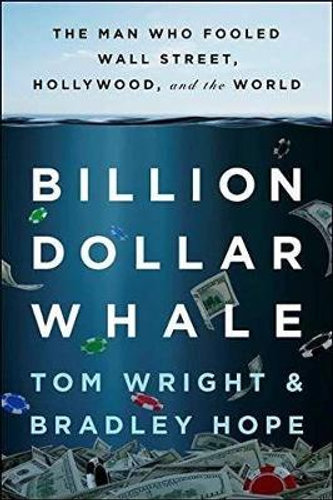
Billion Dollar Whale by Tom Wright and Bradley Hope

BILLION DOLLAR WHALE

By Bradley Hope and Tom Wright

In 2009, with the dust yet to settle on the global financial crisis, a fraud of unprecedented gall and magnitude was being set into motion. Now known as the 1MDB affair, the scandal would come to symbolise the next great threat to the global financial system.

A stunning true tale of hubris and greed, Billion Dollar Whale reveals how one of the biggest heists in history was pulled off – right under the nose of the global financial industry.

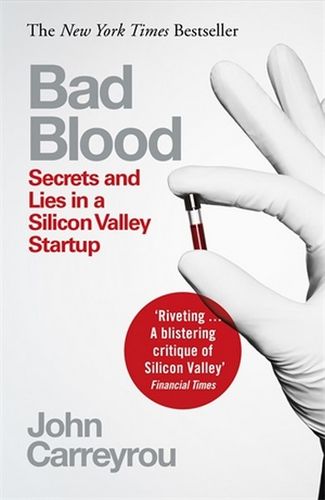
Bad Blood by John Carreyrou

BAD BLOOD

By John Carreyrou

In 2014, Theranos founder and CEO Elizabeth Holmes was widely seen as the female Steve Jobs: a brilliant Stanford dropout whose start-up ‘unicorn’ promised to revolutionise the medical industry. There was just one problem: the technology didn’t work. For years, Holmes had been misleading investors, officials, and her own employees.

In Bad Blood John Carreyrou tells the story of Theranos and encourages us to consider the possible repercussions of our blind faith in a small group of brilliant individuals.

He Who Must Be Obeid

HE WHO MUST BE OBEID

By Kate McClymont and Linton Besser

From the shadows, Eddie Obeid ran the state of New South Wales as his fiefdom, making and unmaking premiers. Along the way he pocketed tens of millions of dollars following corrupt deals.

Following their groundbreaking investigations, Kate McClymont and Linton Besser have unearthed the vast but secret empire Obeid built over decades, producing an authoritative account of how he got away with so much for so long.

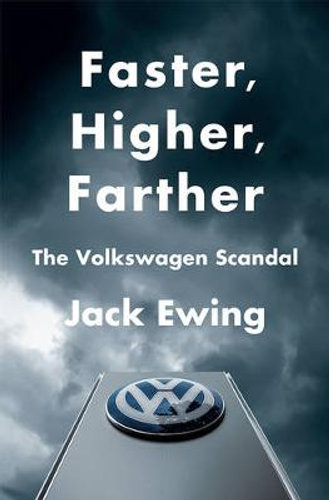
Faster Higher Farther by Jack Ewing

FASTER, HIGHER, FARTHER

By Jack Ewing

When news of Volkswagen’s clean diesel fraud first broke in September 2015, it sent shockwaves around the world. Overnight, the company long associated with quality, reliability and trust became a universal symbol of greed and deception. Consumers were outraged, investors panicked, and the company was facing bankruptcy.

As the future of one of the world’s biggest companies remains uncertain, this is the extraordinary story of Volkswagen’s downfall.


AVAILABLE FROM BOOKTOPIA

All these books are available at booktopia.com.au


Tracey Mills is the Head of Academic Books at Booktopia.

Is nudge management the key to overcoming change resistance?

Business and change are inextricable. But just because it’s common doesn’t mean successful business change is easy. As humans, we naturally resist the new and novel. We will fight or flee from anything unfamiliar, especially if it presents a considerable shift from what we know. However, recent studies reveal that small, subtle suggestions are making huge impacts in changing behaviours.


Effective, optional suggestions

A technique often attributed to making easier, faster, and simpler choices, nudging isn’t new.  We see examples of it every day. Your alarm is a nudge, so is the default renewal of subscriptions, even the ‘low fat’ labels on food are nudges.

The reason why nudges are effective relates to the fact that you are free to ‘follow’ the push or not. You have a choice. For example, GPS directions are a nudge, but how often do we stick to the exact route provided?

One of the most publicised examples of successful nudge management involves the reduction of fuel consumption by Virgin Atlantic pilots. In the aviation industry, pilots – particularly the captain – enjoy much autonomy when it comes to decisions that involve fuel and the flight. The experiment saw how nudges had an impact on the behaviour of captains. By simply informing the captains that their fuel consumption will be monitored and requesting them to report on their fuel performance, the airline saved $5.4 million in fuel.

Perhaps the experiment was highly effective since it avoided making fuel reduction a ‘mandatory’ requirement for pilots. Instead, it preserved the pilot’s sense of autonomy while making subtle suggestions about improving fuel consumption levels. The change didn’t seem out of their control.


Nudging the right way

So what about when it comes to managing change in the workplace? Can nudge management help? If we think about the top reasons for resisting change, nudge management does provide an ideal counter:

  • Fear of losing control: As demonstrated with the Virgin Atlantic experiment, the liberty-preserving aspect of nudges could make them an effective way to start changing behaviour.
  • Concerns about the unknown: The most effective nudges present a benefit upfront. You could suggest an action to simplify a process, help others make healthier choices or ensure their safety (as with speed limits, for example). No one enjoys coercion.
  • Insecurity over reputation: In some change scenarios, people may feel that the shift is occurring because they failed and were ineffective. One type of nudge – the use of social norms – can address this. By confirming that the majority of colleagues feel positive about change (or want to see change occur), that lifts the pressure on the people who may feel personally responsible.


While nudge management is a great tactic to use when implementing change, it’s prudent to remember that it is just one of many. Plus, the most successful examples of using nudges to influence change have involved ‘behavioural change’. Structural changes, for instance, may not be as adequately covered by nudge management.

Change is complex. Resistance is only one of the many challenges that accompany any shift from the norm. Every organisation, team and individual will face unique hurdles in their transformation journey. Great leaders will analyse the specific needs of their team or organisation and consider whether nudge management is a tool they can use.


Building trust in an age of disruption

By Dr Mathew Donald


The age of disruption may be characterised as an environment that is fast-paced, uncertain and risky. This new environment emerged from globalisation, aided by technology and trade interconnectivity, whilst facilitated by social media and the internet. A simple presidential tweet, or small change in a trade war is now transmitted instantly around the world, without necessarily any verification, analysis or investigation. This unfiltered and immediate nature of information may contribute to instability and confusion for staff and stakeholders. Leaders may not be able to control the external environment, yet through explanation, influence and engagement, leaders may be able to effectively reduce the stress and worry that results from disruption.


The interplay of trust and successful change

Leadership is influence. It can generate a willingness or inspiration to follow. Staff do not automatically listen and follow leaders irrespective of the environment, as they need trust as a precursor. If there is low trust in leaders, their messages may not be heard nor believed. It has long been recognised that trust is an element of leadership. Recent research now indicates that trust is also closely related to organisational change success. In a future disruption environment, change is likely to be constant and the need for trust is heightened, so future leaders will likely require excellent skills in communicating, explaining and involving staff in associated change.

Leaders set strategy, direction and plans to inform and influence their teams. The strategy and planning process is designed to signal a way forward, provide context and alignment across a whole array of staff and stakeholders. When new data and information emerge quickly, leaders could be under pressure to react to new advances, new information or developments. The risks in this scenario is where there is a high prospect of leaders regularly reversing and overriding past decisions. Reacting quickly may be just as risky as delaying decisions in disruption and the competition may react before accurate information or analysis emerges.


How disruption erodes trust

The changing nature of disruption creates new challenges as leaders will continue to attempt to build trust by delivering on past promises despite the change around them. Organisations will find it impossible to move forward if the leader is not able to ensure that they are believable and worth following. Imagine if a leader offers a pay rise, only to later discover that their cost of inputs has been altered significantly by a new tariff. Imagine a leader who announced a new acquisition but soon discovers that a new technology has completely eliminated the business value.  Sudden change that alters decisions are part of a disruptive world. So leaders of the future will need to explain changes, risk and uncertainty with their teams in order to prepare for disruption.


Leaders must be ready to respond

In an uncertain environment, leaders will need to explain the fast pace, the uncertainty and risk regularly. Failure to do this adequately will likely lead to staff confusion, or blame toward the leader for not controlling the situation. Staff will appreciate regular and open communication on disruption, even when they do not like the described environment. Communication is such an important part of leadership, a factor that is likely to be more important with constant change, so the new leader will need to be cognisant of various communication forms, language styles, formats and regularity. Leadership communication may even be so regular that staff may be included as partners or advisors, rather than merely as subordinates. Leaders will require efficient, effective and regular communication in order to build trust, those unable or unwilling to operate this way may fail to move an organisation forward with the speed required. The leader of the future will likely be comfortable in explaining the new environment and changes, whilst building teams that are resilient to multiple options and decisions despite any ongoing risk or uncertainty.


Dr Mathew Donald specialises in leadership, management and organisational change and has more than 35 years of business experience. He is the principal of Dr Mat – The organisational Health Doctor ™, available globally for consulting, mentoring and presentations. He is also the author of “Leading and managing change in the age of disruption and artificial intelligence” (Emerald $USD 100.00).

Effective change starts with failure

By Richard Shrapnel FIML


Because no one likes to fail, we’ve created many ‘feel-good’ sayings about it. However, most of us take these so-called clichés with a grain of salt. But in business, leaders must pay attention to their attitude toward failure – it could hold the key to success.

So, how does your business consider failure?


Non-compliance is not failure

Let’s define failure at the outset. Failure has nothing to do with non-compliance. And by non-compliance, I mean not upholding business values, policies, procedures – the set ways which everyone knows the business requires one to act. That’s not failure. That’s breaking the rules; and appropriate sanctions should be applied and enforced. Non-compliance is an issue of discipline, and all business must uphold discipline.

Failure is trying something new, untested, experimenting, stretching the business’s capability to a new level but not reaching the ‘hoped-for’ outcome.

I draw this distinction as many businesses around the world get caught up in not meeting appropriate standards, whether they be internal to the business or external through regulation and even customer expectations. These outcomes are often described as failures, where they are better-considered non-compliance.

Failure should be encouraged whereas, non-compliance should not be tolerated.


Failing forward

Success and profitability rely on a business’s ability to outcompete all others in its chosen marketplace. And that means being able to deliver greater value to customers than your competitors today and importantly tomorrow.

Stepping out, evolving, reinventing and creating are some of the descriptors I would use to flag the type of behaviours that a business must immerse itself in to be competitive. If a business simply continues with what worked in the past, then there will become a time when their customers’ needs and their competitors’ capabilities have all moved on, and they are left behind.

This ability to continually evolve requires the practice of trying, failing, retrying and continuing to learn from each step taken. Then incorporate those learnings into the value that you deliver to your customers.


Barriers to failing

There are many barriers that exist within a business that will prevent it from failing and taking those learnings forward, but they can all be traced back to the business’s attitude to failure.

In many businesses, failure is spelt ‘your fault’, and it is often swept under the carpet or passed around when it occurs. Such an attitude is anti-change and counter-growth. Everyone wants to be associated with the successful project, and no one had anything to do with the failure. Failure can be a source of fear – real fear – but should it be feared?

Material losses can be incurred by businesses where a fear of failure is prevalent. This fear seeds a blame culture leading to denial, no ownership, and a lack of oversight and accountability. Failures may well be hidden where fear is prevalent, and losses escalated rather than mitigated.

There can be no learnings where fear exists as no one will want to be associated with or recall the project nor its lessons.

So what attitude should a business seek to develop when it comes to failure. Well, there are, I believe, two aspects:

  • We are an innovative and growing business, so experimentation is part of who we must be.
  • Failures will occur and will be acknowledged with humility, acceptance and learning.


Honestly, doesn’t something only become a failure if you abandon all the learnings and hope for the future? The attitude you create and sustain in your business must uphold the right attitude towards failure. And do not allow failure to become a political tool within the business.


How leaders should handle failure

The way leaders act with respect to failure will set the role model for everyone else in the business to follow. Failure is a test of and testament to the character of leaders. How leaders handle their failures and those of fellow leaders and colleagues speaks volumes to their character and motive. You should listen carefully to what it says as it will identify the worthy leaders in your business.

Leaders will need to develop humility as a core character trait if they are to build a business that grows and can outcompete everyone else in their market. Humility is the character trait that allows you to listen and learn most effectively, and that is a trait you want in your business’s DNA.

The trait you do not want in your business is self-interest. Self-interest will undermine your individual and your business’s success. If you are always putting yourself first, then no one else will be uplifted, and that uplifting of others is essential for growth.

The right people, in the right places with the right attitude, is essential to the growth and enduring success of your business.

How your business views and approaches failure is a cornerstone to its ability to deliver greater value to your customers every day. Allow the wrong attitude to take hold, and your business will stagnate. Seed, feed and flourish the right attitude, and growth will never be an issue.


Richard Shrapnel is a business strategist, advisor and speaker. He is a Fellow of IML ANZ.