As a marketing leader your annual plan has just been turned upside down by a crisis. What can you do to steady the ship and get your teams focused on the future?
Continue reading
As a marketing leader your annual plan has just been turned upside down by a crisis. What can you do to steady the ship and get your teams focused on the future?
Continue reading
Booktopia’s Tracey Mills handpicks six books to help lead people through technology disruption.
Continue reading
How do leaders unite their people around a shared vision and values, when they include remote workers?
Continue reading
Welcome to the April edition of Leading Edge.
There’s no doubt we are all living through a time that is nothing short of extraordinary. As we watch businesses and services shut down or move online, as we need to self-isolate away from friends and family, and as we are forced to make tough decisions to keep our society safe, it can feel like our lives have been thrown into uncertainty.
These unique times bring unique challenges and I am sure we have all noted many good examples of the professionalism, courage and compassion of managers and leaders in Australia and New Zealand, as well as others who have been found wanting. As leadership professionals, the impact of COVID-19 has demanded many of us to step up to adapt and tackle adversity with new skills and knowledge we’ve never needed or utilised before.
Clearly the Board and team at IML are focusing on the challenges to ensure the organisation can weather the challenges to this business but ensure we continue to support and service our Members effectively. During this period, the Institute is prioritising support to our Members – from helping your business manage change and providing best-practice leadership strategies. Our focus is to ensure you and your organisation are empowered and equipped with the right resources to effectively navigate the serious business impacts of this crisis, and to help you facilitate a path to an effective recovery when the crisis passes.
In this edition of Leading Edge, we’ll share a few of the important initiatives we’ve implemented to assist you in leading through this period. We’ve aimed to provide a comprehensive suite of services to help managers and leaders at all levels to develop relevant and timely skill sets and expertise around crisis management. We’ve also expanded the range of free support services available to you through your Membership, so that you can get appropriate support to match your personal situation and needs. In addition our corporate consultants are developing bespoke solutions for organisations to match specific business challenges and to complement commercial responses to the pandemic. As the crisis continues to evolve, we’ll be investing in further timely and relevant services to support you and your business. If you have any requests for specific resources that we haven’t yet produced, please get in touch with our team by emailing membership@managersandleaders.com.au, and we’ll do our best to create a solution for you.
Finally, in the face of a global health emergency, I encourage you to check in with your staff and yourself regularly throughout this period. The impact of this pandemic reaches far further and deeper than our workplaces. It’s important to put a high priority on your mental and physical health and those you lead. This crisis is a crucial test for leaders at all levels, but it is also one of great opportunity for all of us to step up and embrace the challenge and opportunity it presents. There has never been a greater need in recent memory for a strong and united community of managers and leaders than right now.
John Withers CMgr FIML
Chair of the Board

By David Pich CMgr FIML
IML ANZ Chief Executive
Desperate times call for desperate measures. Ironically, this saying is a modern iteration of an observation from ancient Greek physician Hippocrates’: ‘for modern diseases, extreme methods of cure are most suitable’. And here we are in 2020, deep into a thoroughly modern crisis that is caused by a thoroughly modern disease. We must – quite rightly – leave the medical response in terms of methods of cure and prevention to the experts (and I pause to give a shout-out those at the frontline of COVID-19 who deserve all honours and awards for their efforts).
Other than fully following the instructions of the medical experts, as managers and leaders, what should our own approach be? What should managers and leaders do in the new normal that is COVID-19? Be the experts at leading well.
I say to all managers and leaders; this is your time. It’s your time to lead. It’s your time to apply the skills that you’ve learnt – those totally misnamed ‘soft skills’ that aren’t actually soft at all but are extremely ‘hard’. These are the skills that you’ve been honing, working on, reading about, watching YouTube clips about and practising. In your time as a manager and leader you haven’t always got things right, but you’ve done your best and you’ve bounced back each time. Now is your time to bring all of these skills together. It’s your time to SHINE as a manager and a leader.
Here’s how you can make your leadership skills SHINE;
Show vulnerability. This is an extraordinary, once in a generation (at least!) situation that is impacting everyone, personally and professionally. As leaders we’re not expected to be superheroes. We have lives and families too and we’re in the same boat right now as our staff. It’s important to share our own stresses and worries as this helps to normalise the stresses and worries that our staff are currently experiencing.
Hold regular communications sessions. Regular communication across multiple channels is absolutely crucial, especially when staff are working from home or aren’t always in the normal office environment. It’s up to the leaders to set up these communication lines and to walk the talk by ensuring that you are always on the calls, replying to messages and sending emails. Don’t go missing – ensure that you are very visible. At IML ANZ we have set up an All Staff Hump Day Huddle on Zoom. My leadership team has a WhatsApp Group and all teams have set up eChat Sessions and Microsoft Team groups.
Include your team in decision-making (aka, delegate). The sheer number of decisions that leaders need to make right now is incredibly daunting. The very best thing a leader can do is to share the decision-making load. Involve others in the decisions that need to be made, seek opinion and advice, call out for different views so that you can weigh up the pros and cons of things you are considering. At IML we decided to move staff to a working from home model very early in the COVID-19 outbreak. This decision was a leadership team decision that came about after much discussion and consultation. As the leader you need to facilitate the decision-making process, you don’t need to make all the decisions yourself.
Notice things. This is absolutely key during times like this. It’s critical that as a leader you establish ways for you to know what is happening in your business and amongst your staff. Mental health is likely to be significantly impacted and you need to be checking in and making suggestions to assist staff who are impacted. You’re not expected to be a counsellor or a psychologist. That is best left to the professionals. But you need to have your finger on the pulse of your team so that you can point people who need assistance or advice to the correct resources. One way to do this is to contact people regularly and to ask direct questions, such as; Are you OK? Are you feeling lonely or isolated? Are you struggling with anything right now?
Empower your people to make their own decisions about their own situation. One size doesn’t fit all and the current pandemic will impact different people in your team in different ways. A key role as a leader is to recognise this and to allow people to make the right decision for themselves and their families. What makes you comfortable as a leader might make others feel very stressed. It’s time to apply all the emotional intelligence you can muster.
As a leader, as this crisis unfolds this is your time to SHINE. I’ve included below the first all staff email that I sent to my team this week. Feel free to read, comment below or steal the content. See if you spot the SHINE elements in the email. It’s obviously not perfect, but it might be a good start for leading your team or business through the next few weeks and months.
This is an unprecedented time for managers and leaders. It’s undoubtedly a time of crisis and of considerable confusion. But it’s also an opportunity for managers and leaders to show how absolutely critical sound leadership is. It’s your time to shine and to lead well.
– STARTS –
Subject: CEO Update 1. Please read
Good morning team
I hope you all had a good weekend. I’m not completely sure what ‘good’ means anymore, but at a very base level – I hope you’re all well and feeling healthy.
First, I want to apologise to the entire team. I was a little quiet last
week. I did speak to each of the GMs many times, but I quite literally didn’t
have time to write this All-Staff email. On a personal note, Eileen and I are
having our house renovated. The entire back of the house has been removed
(including the whole kitchen). On Monday last week, the builders accidently cut
through the sewer line in the back garden. As a result we’ve been without a
kitchen, washing machine and toilet all week. It hasn’t been pretty!
On top of that, many of you will know that I’m the President of my kids’ school
Parents & Citizens Association. The P&C employs 25 staff, all on casual
contracts. If (when!) the school closes these 25 staff will likely lose their
income. I spent much of last week trying to find a solution to this very sticky
issue. The announcement yesterday that schools in NSW, VIC and ACT will close
from tomorrow makes it more likely that Queensland will follow suit sometime
soon. My own kids (Pearl and Olive) are no longer in school from today – this
is a personal decision that Eileen and I have made based on our own reading of
the situation and the experience of other countries. For example, Germany
closed all schools two weeks ago.
That phrase ‘personal decision’ is really key, and other than to say ‘hello’ to you all, it’s the reason for this email. I want to say this …
These are uniquely difficult and different times for everyone at IML. Everyone is impacted by the current situation, but of course different IML staff members are impacted in different ways. Some people have kids, others don’t. Some have medical issues, whilst others don’t. Some staff live alone, others live with family or in shared accommodation. On top of all of this, we all have our own personal concerns, anxieties and responses to the COVID-19 situation. My personal response might be very different to yours. And my decisions and actions based on that response will also be both personal and different.
So, and here’s the point (sorry it took me so long to get to it!), every IML staff member must make a personal decision about what they will do. This includes – but isn’t limited to; childcare arrangements, living with family members, locations etc. All I ask is that you let your manager or GM know what you’re doing. Communication is key in all of this. But, fundamentally, you are empowered to make decisions based on your own personal views and circumstances.
It’s always good to give examples, so here’s a couple to illustrate what I’m talking about.
Example 1. You have kids and you decide to keep them home from school / childcare where normally you would drop the off and then head to work or work from home. IML totally understands this and supports your decision. Family and health comes first. Please let your manager know that you’ll be less available due to the change in circumstances at home.
Example 2. You live alone and you think it would be better if you went to live with your parents during this time. IML totally understands this and supports your decision. Family and health comes first, Please let your manager know where you’ll be and what the change in location might mean to your working from home situation. IML will then assist with any technology issues you might encounter.
As I’ve said, communication is key and I’ve asked all GM’s to ensure that all teams are talking across various channels (email, Zoom, WhatsApp etc). I also want to ensure that no one at IML is any more stressed than they need to be at this time. If anything at all is concerning you, please do get in touch with your GM, with HR or with me personally. My eDoor (yep that’s a thing these days!) is always open.
To emphasise my point again, you must do what’s right for you, your health and your family at the moment. Of course, it’s important to keep the IML business running, albeit in a very different format. We’re all empowered to ‘do our best’ in what are very unusual and difficult circumstances.
As an example, today I’m planning to pop to KMART first thing to buy some games and puzzles for the kids. Then I’m spending an hour reading with Olive. Then I’m writing a couple of IML articles (Yes, it’s happening, Whitney!). Then I’m doing some (very) simple maths with Pearl for an hour. She’s 9 and I’ve realised that Year 3 Maths is way beyond my capability.
This is how my days are going to look for a few weeks – I and the leadership team fully support however your days will look.
Finally, I do want to say this; if you’re feeling unwell, please let your GM know (as well as following medical procedures). We need to keep an eye on each other and look out for each other, even from afar.
Sam will be setting up an All Staff Huddle later this week. It’ll be great to chat to everyone and see / hear how everyone is doing.
Have a great day 😊
Dave
-ENDS –
Please don’t hesitate to contact me or the Institute of Managers and Leaders Australia and New Zealand if there is anything we can do to assist you or your teams through these tough times.
David Pich

By Jason T Smith
It’s often said that if you keep doing the same thing then you shouldn’t expect a different result. For more than a decade, I led my franchised physiotherapy business, the Back In Motion Health Group, with a traditional vertical organisational structure that mostly worked… up to a point, anyway. But I felt we could do much better.
Our model was unintentionally suffocating talented people through hierarchy and self-limiting position descriptions. Job titles and lines of reporting became discriminatory. Strategy and decisions were mostly formulated in a linear, top-down fashion. Conversations happened behind closed doors. Without noticing it, elitism and class divisions crept into our workplace. People were being artificially designated into executive, management and support strata. Influence was driven more by seniority and position, than by intelligence and merit. Creativity was dying.
The organisational structure that we had was quite normal – the traditional pyramid – but it certainly wasn’t optimal. Especially given that I was just about to set an unreasonable objective of doubling our group footprint over the next three years. We affectionately dubbed it ‘7/50/100’. It was the aspiration to have our brand accessible in seven states and territories of Australia, delivering $50 million worth of physiotherapy and related services, through 100 locations. So, it became time to shake things up.
We didn’t just turn the traditional pyramidal organisation chart upsidedown as some have attempted. It wouldn’t have worked. We didn’t quite go flat or matrix in our management approach either. This was more about a change in our inner state, than it was a governance strategy. We needed to think, talk, and behave differently. We rounded out our organisational model into a threedimensional spherical expression with no top and no bottom.
Congruent with the spirit of innovation that characterised the change, we gave our new way of life its own name: ONEteam™.
We bounced forward. Or, as management literature might refer to it, we generated ‘adversarial growth’. We evolved through the pain of failures in the past, driven by the hope of the future. We reset our culture around the imperatives of over leadership and under-management. People had their titles stripped, and we dismantled traditional job descriptions. Colleagues were grouped into ‘functions’ and ‘pods’, and people no longer reported to a ‘boss’. We all served the mission rather than a (wo)man.
The principles of collaboration, distributed authority, and peer accountability became paramount. Individuals identified their best contributions to the workplace, kept their role profiles fluid to ensure agility and adaptability to changing demands, and no longer needed permission to get the job done. Performance was assessed in real time, financial records were laid bare, and strategic workflow became streamlined into the essentials. Minimalism reigned, as we sought to build a champion team, rather than a team of champions.
We even allowed peers to set their own remuneration bands within an overall salary cap, assist in the hiring and firing decisions, and decide their own bonus and incentive reward systems. Why? Because the owners can only guess what their people are motivated by, and inevitably will get it wrong some of the time.
We pulled down office walls, changed seating configurations to cluster people into more functional arrangements, and built additional breakout and meeting rooms. Reserved car parks were opened to all staff on a first-come basis, and we all shared the kitchen cleaning roster.
Even our meeting formats got challenged. We wanted less of them, and more decisions within them. Only those people with a contribution to make or an outcome to achieve were expected to attend. Every meeting was minuted and published for the whole team, with no secret business or hidden agendas.
In short, most things in our once-traditional workplace changed. Only a few essentials remained. We got turned outside-in and downside-up. A real shake up. But this change wasn’t haphazard or poorly considered. It was a metamorphosis of careful design. An intentionally new structure.
We bred a race of corporate freedom fighters. We fought against our own traditions, our flawed habits, and our ineffective strategies of the past. Today, we have achieved brand presence in more than seven states or territories, generated revenues in excess of AU$50 million per annum, and host more than 110 locations in Australia and New Zealand.
Our leadership revolution revealed an authentic and scalable way to give each team member the freedom to do what they love and excel at it. And in facilitating this, we gained so much more.
Jason T Smith is the founder of the Back In Motion Health Group, the Iceberg Leadership Institute and the SOS Health Foundation. In his book, Outside-In Downside-up Leadership (Major Street Publishing AU$29.95), Smith shares how he and his colleagues found the sweet spot between authentic collaboration and the holy grail of peer accountability in their workplace.
This article originally appeared in the December 2019 print edition of Leadership Matters, IML ANZ’s exclusive Member’s magazine. For editorial suggestions and enquiries, please contact karyl.estrella@managersandleaders.com.au.
By Amy McShane
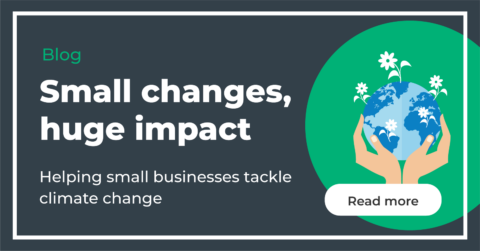
This year has certainly seen a shift when it comes to how businesses are approaching climate change. Recently, Qantas piloted the world’s first ever commercial flight with zero landfill. Paper straws are now commonplace in McDonald’s and 7-Eleven even offered free coffee to customers who brought their own reusable cup for a month.
But how can small businesses in rural areas – with less resources and less time than the big corporations – do their bit to tackle climate change? It was this very question that Jayne Thorpe CMgr MIML was asking herself last year.
And so her new business, Stablish, was born.
Stablish provides small businesses and not-for-profits with climate change business development services, grant and tender preparation and sustainability assessments.
“There’s so much business development work that you can put in to [grants and tenders] to make yourself more competitive,” says Thorpe. “I use this as a starting point to talk to businesses about their business plan, what their future is about and their supply chains. This translates over to sustainability assessments, so there’s a real overlap there.”
It was the combined love for innovation and the earth that led the southern Queensland native to take the leap and self-fund her business.
Thorpe has been green fingered since her university days, with a Bachelor of Ecology and a Postgraduate Diploma in Ethnobotany from the University of Southern Queensland under her belt. She’s also a certified Environmental Practitioner and the current President of the Darling Downs Environment Council.
“Innovation to me is all about getting started with positive change to what’s happening now,” says Thorpe. “There are definitely changes that need to happen now around climate change, so they kind of tied up together. There’s lots of applications of innovation through all the work that I’ve done. So I was building on that, but offering it as a consultancy service.”
That previous work was done during her time at Condamine Alliance and Notomys Seeds and it was that experience that helped spark the inspiration: “When everybody is delivering current projects and services it can be quite difficult to figure out what innovations would be of benefit… so having someone look at those collectively was of really high value.”
Thorpe is running Stablish along with her role at CatholicCare Social Services, where she works part time in business innovation. Having also run a habitat reconstruction business with her husband for the past 15 years, juggling different roles is something she is used to.
And it’s the impact on her community in Toowoomba that makes it all worth it.
“I was born here, worked here all of my career and went to university here,” says Thorpe. “It’s being able to recognise that I have something to offer that not everybody is across. Seeing people pick up on what I’m able to share and take things forward for their own business is very rewarding.”
This article originally appeared in the December 2019 print edition of Leadership Matters, IML ANZ’s exclusive Member’s magazine. For editorial suggestions and enquiries, please contact karyl.estrella@managersandleaders.com.au.

By Anthony O’Brien
For many sports fans and members of the media, 24 March 2018 is a day that will forever live in infamy for Australian cricket.
To recap, Australia was playing a crucial test in Cape Town, South Africa, and the locals were on top. To try and stem the flow of runs, David Warner and Cameron Bancroft hatched a plan to use sandpaper on the red ball to help it swing. Simply put, a swinging cricket ball is harder to hit or can increase the chances of getting unwary batsmen out. The bottom line, whether you take sandpaper, dirt, or Brylcreem to a ball, is that it’s a form of cheating. In other words, it’s just not cricket.
After a couple of false starts, the game’s peak body Cricket Australia (CA) accepted the behaviour of Warner, Bancroft, and skipper Steve Smith, who appeared to condone the ball-tampering by his inaction, was unacceptable. The trio were given lengthy suspensions. Cricket Australia Chairman, David Peever said at the time, “The CA Board understands and shares the anger of fans and the broader Australian community about these events.”
CA CEO and former professional cricketer, Kevin Roberts, admits the national game found itself in this parlous predicament because, “cricket’s part of the fabric of our culture”. Roberts took over as the boss of Australian cricket in October 2018.
To provide some perspective about how important the red ball game is for Australians, Roberts compares the national cricket team, which is famous for its Baggy Green cricket cap, to the mighty All Blacks of New Zealand. “From a cultural perspective, cricket is a national sport just as rugby is New Zealand’s national sport.”
Before working in cricket full time, Roberts had about 20 years in sports sponsorship working with the likes of Adidas and Kiwi sportswear giant Canterbury. He continues, “When people see an example of the spirit of cricket not necessarily being demonstrated in the national sport that’s part of our nation’s culture, it becomes a big issue.”
The long and challenging journey that CA has travelled in the past two years offers a fascinating case study in organisational culture for leaders in all industries.
In April 2018, CA commissioned the Ethics Centre to conduct an independent review into cultural, organisational and governance issues in cricket following the Cape Town ball-tampering scandal. The evaluation aimed to establish a charter setting out standards for improved player behaviour and expectations of the Australian men’s national side.
The review featured a panel of past and present players including national test captains Tim Paine and Rachael Haynes, who was deputising for the legendary Meg Lanning. Others on the panel included former internationals Shane Watson and George Bailey, the world’s best fast bowler Pat Cummins and men’s team coach, Justin Langer. Also an Ethics Centre survey garnered responses from 450 CA executives and employees, current and former players, state and territory association staff, and representatives from sponsor and media organisations.
Running parallel to this process was an examination of team conduct contributing to the events in South Africa. There has been a perception among some sections of the community that the Baggy Greens were arrogant. However, the bubble created by regular test and cup wins tended to paper over the cracks.
Despite the community cynicism, CA has responded decisively to the Cape Town fiasco, which is a credit to the leadership of Roberts, who joined the CA Board in 2012 before switching to executive roles from 2015. Unenviably, Roberts was in the CEO’s chair when the Ethics Centre released its 145-page report outlining 42 recommendations for CA’s consideration. Roberts recalled, “By the time I came into the CEO role, it was time to release the findings, and more importantly to get cracking on its implementation.”
While there was a mixed response to the report’s release, what struck Roberts was, “how isolated incidents had affected people who were on the receiving end of it”. For instance, the report asserts, “We have (also) been told of groundsmen (who) have been required to prepare practice pitches – spending time and effort only to see an elite bowler send down only seven deliveries before reaching the mandated ‘quota’ – and therefore stopping.
“This kind of behaviour speaks of gross disrespect to those who are not natives of the ‘gilded bubble’.”
While that might be an isolated incident, Roberts determined to consider how people were affected, either positively or negatively, through their interactions with cricket. As a result, the new CEO and his team released a cultural change program focused across three categories – people, high performance, and leadership.
CA launched a leadership program in 2019, which is a tailored version of a world-leading program from Harvard University, explains Roberts. Around 40 executives, senior managers, Paine and limited-overs skipper Aaron Finch, as well as coaches took the program, and are now collaborating on developing CA’s leadership culture. “We’re on that journey together, which is fantastic,” Roberts said.
Additionally, CA established the Australian Cricket Leadership Team in late 2018. This group includes the CEOs of each of the state and territory cricket associations. “This team acknowledges that cricket operates through a federal structure as opposed to a corporate hierarchy, and it was about spreading the leadership through that broader cricket ecosystem.”
Since Cape Town there has been a significant turnover of CA’s executive team, including the notable resignation of long-term CEO James Sutherland. Former Hyundai executive Scott Grant joined the peak body as COO. Like Roberts, the new operations supremo is no cricket blowin, and moonlights as the president of Bankstown Cricket Club, where the famous Waugh twins played. Roberts, who also scored runs for Bankstown, said, “We’ve got Drew Ginn, the former member of the Oarsome Foursome [Olympic Games winning] rowing team. He’s working with the states and territories to develop the next generation of talent.” Also, Ben Oliver, who was working for the Western Australian Cricket Association, is now responsible for the national teams. “So, there’s been some development among our leaders themselves as well,” Roberts adds.
CA has put 100 managers through a cultural change program. “We’ve also identified the need to improve the nature of communication inside and outside the organisation,” Roberts said. This project includes establishing a new internal communications platform aimed at creating closer links throughout the organisation. CA has also implemented new forums for all staff to ask questions or raise issues directly with management, in a safe environment.
Additionally, Roberts and his team have improved communication with relevant stakeholders, such as the media. To this end, CA has increased media training for its leadership and players. “We are making an extra effort to bring the media into the tent and to be open with them,” said Roberts. “The cricket media are great storytellers in the game, and so we must embrace their role.”
Under the affable men’s test captain Paine and the approachable limited-overs men’s skipper Finch, Australian cricket teams have made decent strides in reconnecting with the public. Paine for example, has introduced a pre-game handshake between the Australians and their opponents, which seems to have gone down well with the cricketing community. “The men worked together with the Australian women’s team on a players pact. Put simply, they aspired to make Australians proud in everything that they do as players,” explained Roberts. “We worked with the players to define what we stand for and agreed our goal will always be to win because it’s a professional sport.
 “But our non-negotiable expectation is to compete with respect. It’s not just about winning – it’s also about how we go about it.” That said, the test team’s magnificent retention of the Ashes for the first time in England since 2001 is a significant fillip for the game in Australia. Particularly given it followed just a few weeks after the Australian women’s team secured an outstanding Ashes series win on English soil too.
The proof is in the pudding for the image of Australian cricket, with the men’s cricket team not earning a single code of conduct charge in the 2018–19 season. This result was a first clean sheet in eight years for the prickly Baggy Greens, who have been notorious for aggressive sledging of their opponents. At the same time, Roberts points to the redemptive journey ‘best-since Bradman’ Steve Smith has undertaken since Cape Town. The former skipper visited many schools around Australia during his enforced absence from the Australian cricket team. “Steve Smith had a profound positive impact on several school children by having the courage to open up and talk about his experience as a leader during and beyond the Cape Town situation,” offered Roberts. “So that’s where the players are fantastic, in opening their hearts, telling their stories and I guess embracing the vulnerabilities. That’s what is connecting with the public.”
However, deep wounds will always take time to fully heal. A recent Roy Morgan poll indicated that the Australian public’s distrust in cricket is higher than any other sport. Although a level of distrust continues, there is some good news. Women’s cricket continues to provide a boost to the overall image of the sport with higher trust than distrust, according to Roy Morgan. Roberts comments, “We want cricket to be a sport for everyone, not a sport for some. That means embracing gender diversity, embracing cultural diversity and all other forms of diversity.” To celebrate diversity, CA is aiming to set a world record at the T-20 Women’s World Cup final on 8 March 2020 for attendance at a women’s sporting event. The final will be held at the mighty MCG, which seats around 100,000 and will take place during International Women’s Day.
As a leader, the humble former NSW batsman Roberts says, “It’s more for others to have a view on my leadership style, but… I seek to be people-focused and to develop deep relationships with stakeholders.”
Roberts admits to presenting a straight bat when faced with difficult decisions. “I make the hard decisions required of a leader. While I try to do so in a way that shows respect for people, I must accept that people won’t always feel good about the decisions or the way I managed them. I’d like to think I demonstrate courage in leading from the front when we face issues so that our people can get on with making a difference.”
This article originally appeared in the December 2019 print edition of Leadership Matters, IML ANZ’s exclusive Member’s magazine. For editorial suggestions and enquiries, please contact karyl.estrella@managersandleaders.com.au.

By Nicola Field
In today’s fast-paced world, the term ‘agile’ has become ubiquitous. Ask any manager or leader if they’re agile, and the response is bound to be a resounding “Yes!” But an innovative project methodology is redefining what agility is all about – and it has applications across a wide range of industries and organisations.
At this stage, some distinctions are essential. Lorna Worthington CMgr FIML, is Managing Director of Baker Worthington, and a Registered Agile Practitioner. She explains, “Agile leadership and/or management is the style. Agile Project Management is the tool or concept used for execution of projects.”
Even with this clarification, to the uninitiated, Agile methodology can appear baffling. It comes with its own language that speaks of scrums, sprints, Kanbans and stand-ups. And, as Agile first arrived on the scene around 20 years ago, a range of methodologies have evolved including Prince2, Prince 2 Agile and SCRUM. It can all seem very confusing.
Tom Lynam, Client Engagement Lead at Management Consultants – Tanner James, acknowledges that one of the first challenges of the Agile methodology is to understand what it’s all about, and how it can benefit an organisation. To build a clear picture, he says it’s worth heading back to where Agile first began.
As Lynam explains, “Agile originated in the world of software development. It was a way of working that allowed new software to be developed in smaller, shorter cycles – or bursts of activity. This way, ‘Version 1’ could be quickly completed, and then improved upon to reach ‘Version 2’. There was no point doing months of work if the customer’s needs changed or if the requirements changed over time,” adds Lynam. “So the process was simple: Develop, test and learn, then build on the product from there.”
As Lynam points out, this methodology allowed software developers to get a product to market quickly, achieving something close to customer requirements while incorporating feedback along the way.
The Agile approach is very different from the more traditional ‘waterfall’ system of project management. The latter involves a sequential, linear process spanning several distinct phases that typically include project initiation, project planning, project execution, and project completion.
A key downside of the waterfall approach is that it can hinge on very specific, rigid assumptions being in place from the outset. A sudden change to the project’s parameters have the potential to render much of the work completed to date useless, and this can throw timelines and budgets into disarray. Agile can help to overcome such risks.
Worthington explains, “Fundamentally, Agile is a bottom-up approach that empowers teams to make decisions and drive change. The approach focuses on gathering the experience of customers, staff, managers and other key stakeholders, then looking at how that information is acted upon and leveraged within the organisation.”
As with any innovation, it may initially be unclear how Agile can benefit an organisation. It can be helpful to refer to the 12-point ‘Agile manifesto’ that was drawn up in the early days to encapsulate the key aims. While many are specific to software development, all industries can take relevance from several of these founding principles, including:
Moreover, in today’s environment where managers are under pressure to accelerate, Agile leadership can offer distinct advantages.
As Worthington points out, an Agile leader doesn’t direct or manage projects. Rather, they offer support by removing bottlenecks. Most importantly, they articulate where the organisation is going and guide the team towards this broad vision.
While Agile has its benefits, leaders and managers need to assess whether this approach is right for their industry, their organisation and a particular project.
Lynam believes that some industries are better suited to Agile than others. “Software development is at the far end of the scale. It is very well suited to an iterative approach. But if you’re looking at something like the construction of, say, a major bridge, the iterative approach may be less suitable.”
Academic research shows that Agile has been used with success across a variety of industries, from marketing and food manufacturing to the development of nuclear power plants.
However, even if the industry is suitable, Agile is not right for every organisation.
Lynam notes, “Agile will struggle in a ‘command and control’ environment. A core concept of the methodology is that the people doing the work are best-placed to make the decisions. This means you need a lot of trust in employees.” He is quick to add that organisational culture may be more of a blocker to Agile rather than a reason not to adopt it: “It may be that the organisation needs to change its culture.”
Making the decision to adopt Agile methodologies can be invigorating for leaders and managers – and their teams. However, there are pitfalls to avoid.
Lynam explains, “A typical mistake we see when organisations aim to adopt the Agile methodology is tackling wholesale change from the outset. We recommend starting small. Bring Agile into smaller projects, test and learn using one team, and understand what worked and what didn’t.”
There can be other challenges too. Staff scheduling can be an issue as Agile projects call for a group approach. Teams can also be impacted by change requests – and approvals – which can occur quickly. This highlights the need for every team member to be able to interact, and more importantly, accept that rapid change is a possibility at any stage of a project.
As Worthington notes, “Change generally translates into varying levels of disruption, and operating in this environment demands a flexible, bottom-up approach to management and leadership.”
For managers and leaders interested in gaining accreditation in Agile methodologies, a variety of courses are available. Some are available online, others involve attending multi-day courses.
Lynam urges care in the choice of trainers explaining that while there is a wide range of price points, “You get what you pay for”, he cautions.
“Before investing in Agile training, due diligence should be undertaken to be sure you have the right support and the right level of training and coaching,” says Lynam. “Plenty of organisations sell silver bullets, but in business there are none. It’s a matter of looking at what’s available and taking best practice and tailoring this to your organisational structure.”
Lynam notes, “Formal training allows individuals to spend time with someone who has ‘been there and tried it’, and who should be able to provide pragmatic advice on how to implement the techniques in the Agile method. That said, training only gets you so far, and on-the-job training is highly valuable.”
The full version of this article originally appeared in the September 2019 print edition of Leadership Matters, IML ANZ’s quarterly magazine. For editorial suggestions and enquiries, please contact karyl.estrella@managersandleaders.com.au.