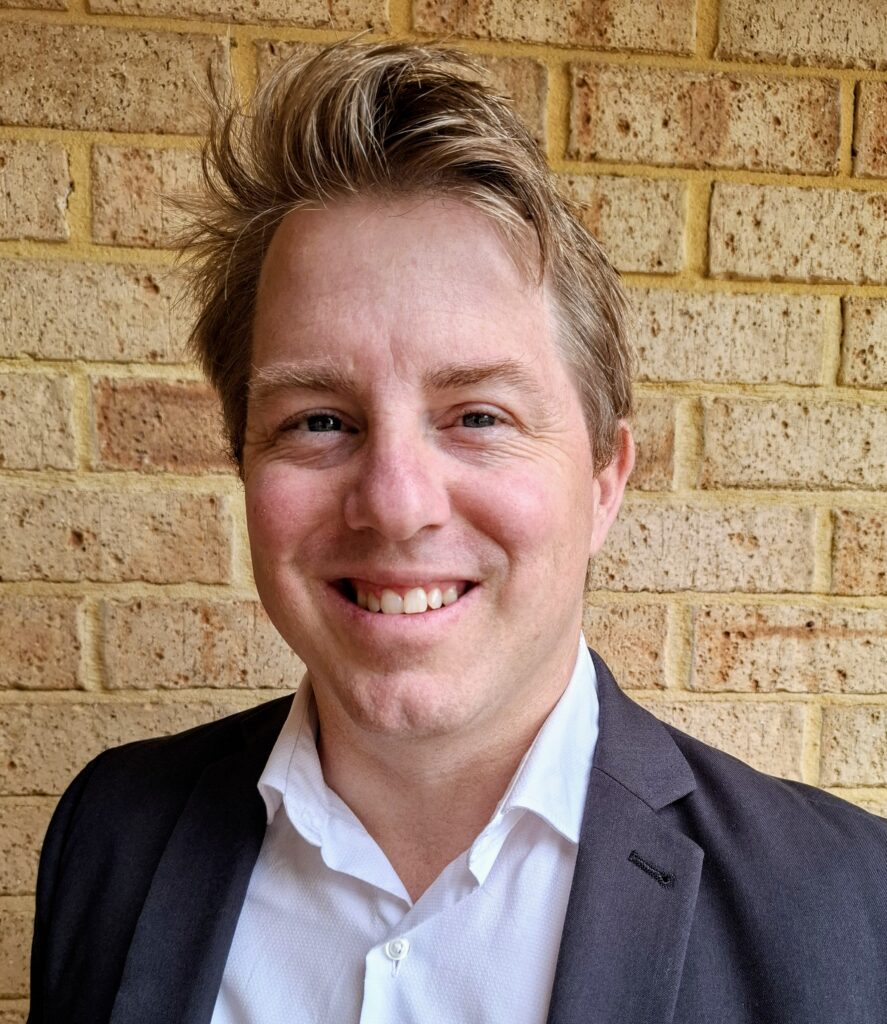

In this Member Spotlight, Graham Sharpe CPMgr AFIML shares his leadership journey as Manager, Recreation Camps Strategy at the Department of Creative Industries, Tourism and Sport, and how an inclusive leadership approach can foster stronger engagement, productivity and performance in teams.
Can you tell us about your leadership journey and what led you to your current role as Manager, Recreation Camps Strategy with the Department of Creative Industries, Tourism and Sport?
I’ve often said that I’ve led a charmed life. From a young age my family instilled in me community service and volunteering, which sparked a lifelong passion for helping people develop, learn and thrive. That naturally led me into roles as a sailing instructor and surf lifesaver, where I discovered two things that still shape my leadership today: creating opportunities for others and taking responsibility when it matters most.
Those experiences evolved into a career in recreation, outdoor leadership and workforce development. Early in my career I was fortunate to have some outstanding mentors who encouraged me to pursue qualifications in training and assessment and to look beyond delivering programs toward improving the way organisations support their people.
After several years working across various casual and contract roles, I joined what was then the Department of Sport and Recreation in Western Australia. It gave me the opportunity to combine my profession with something I genuinely care about, creating positive community outcomes through recreation. As the organisation evolved into the Department of Creative Industries, Tourism and Sport, I was fortunate to take on increasingly broader leadership responsibilities across operations, governance, quality, workforce capability and organisational performance.
Along the way, I’ve tried to stay connected to the profession that first inspired me. Whether that’s supporting Surf Life Saving, contributing to national adventure activity standards, teaching future recreation leaders or guiding sea kayaking expeditions in Murujuga, those experiences keep me grounded in the realities faced by frontline staff. I think that’s important because strategy is always better when it’s informed by operational experience.
I believe practical experience and professional learning should go hand in hand. That commitment led me to complete a Master of Leadership through Deakin University alongside qualifications in governance, risk management, training and quality systems. Every stage of my career has reinforced that leadership is a continual learning journey rather than a destination.
Today, I have the privilege of helping shape long-term sustainability, governance and future direction of a statewide recreation camps service. It’s a role that extends well beyond managing facilities. It’s about creating opportunities for people to build confidence, resilience and connection, while ensuring the people and systems behind those experiences continue to grow and improve. Being able to contribute to that purpose is something I find incredibly rewarding.
Your leadership journey has evolved from operational supervision to broader ‘system leadership’. What does system leadership mean to you, and how can it help organisations improve productivity, collaboration, and long-term outcomes?
My understanding of system leadership has been heavily influenced by my experience in Surf Life Saving. It’s one of Australia’s most complex community movements simultaneously an emergency service, volunteer organisation, youth development pathway, sporting body, education provider and community builder. Despite that complexity, it works remarkably well because of the systems that connect people, processes and purpose.
Early in my career while working for Surf Life Saving Western Australia, one of my managers helped me understand that leadership isn’t just about leading people directly. It’s about creating the environment that allows people to succeed. That insight shifted my thinking from supervising day-to-day operations to improving the systems that support them.
For me, system leadership means looking beyond individual teams or functions and understanding how the whole organisation works together. Productivity, culture and performance are rarely the result of individual effort alone. They’re usually outcomes of the governance, relationships and ways of working that leaders establish.
I’ve seen this throughout my career. In Surf Life Saving, club office-bearers change regularly, volunteers have limited time, and frontline lifesavers need to focus on protecting their communities. Strong systems reduce unnecessary complexity, provide consistency and allow people to concentrate on what matters most. The same principle applies in the public sector. When governance is clear, information is reliable and processes are well designed, people spend less time navigating bureaucracy and more time delivering value.
System leadership is equally important in geographically dispersed organisations. Shared standards, common language and consistent governance help connect teams across multiple locations while still allowing flexibility for local circumstances. That consistency builds trust, improves collaboration and helps everyone understand how their work contributes to a much bigger purpose.
I don’t see systems as bureaucracy. I see them as enablers. Good systems empower people to make confident decisions, support collaboration and create the consistency needed for organisations to perform well over the long term. When we get those foundations right, productivity, collaboration and culture naturally improve.
You oversee governance, workforce capability, and long-term sustainability across a large recreation camps network. What have been some of the most rewarding challenges in leading a complex operation, and how have you balanced productivity with quality outcomes and staff wellbeing?
One of the most rewarding challenges has been helping transition five recreation camps from operating largely as individual sites into a more integrated statewide service. Each camp has its own history, culture and local identity, so the challenge has never been about making them all the same. It’s been about creating enough consistency that we can operate as one network while still respecting what makes each location unique.
That has involved strengthening governance, improving workforce capability, developing common standards and creating clearer operating frameworks across the network. Much of that work happens behind the scenes, but it’s those foundations that allow frontline teams to deliver safe, high-quality experiences for thousands of participants every year.
Leading a geographically dispersed workforce has also reinforced the importance of communication and visibility. During periods of organisational change, people naturally want clarity about where they’re heading and how decisions are being made. I’ve found that being present, listening carefully and communicating openly helps build confidence during uncertainty.
One lesson I’ve learned over the years is that productivity and wellbeing are not competing priorities. High performance is much easier to achieve when people understand what’s expected of them, have the right support, and feel trusted to do their jobs well. Investing in capability, providing clear governance and removing unnecessary barriers allows people to focus their energy where it matters most.
Perhaps the most rewarding part of leadership has been watching individuals and teams grow. Whether it’s seeing someone step into a leadership role, develop new skills or take on greater responsibility, those moments remind me that sustainable organisational success is ultimately built through people. Strong systems are important, but they’re only valuable if they help individuals and teams perform with confidence and continue developing over time.
Psychological safety is increasingly recognised as an important part of effective leadership. How do you create an environment where people feel comfortable raising concerns, challenging ideas, and learning from mistakes, while also maintaining accountability and high performance?
For me, psychological safety begins with leadership visibility and presence. People are far more likely to raise concerns, challenge ideas or ask for help when they know their leader is approachable and genuinely interested in listening. I make a conscious effort to be present, particularly during periods of change or heightened pressure, because those are often the moments when people need support most.
A key part of creating psychological safety is reserving judgement and listening first. When someone raises a concern, reports a mistake or offers a different perspective, my role is to understand before I respond. That doesn’t mean avoiding difficult conversations, but it does mean ensuring people feel heard and respected.
I also believe psychological safety and constructive challenge go hand in hand. Some of the best organisational decisions emerge when people feel comfortable respectfully questioning assumptions, testing ideas and offering alternative viewpoints. As leaders, we must model that behaviour ourselves by inviting challenge and demonstrating that disagreement, when focused on achieving better outcomes, is healthy.
Creating space for mistakes is equally important. In complex operational environments, mistakes will happen. The goal isn’t to create a culture where people are afraid to fail; it’s to create a culture where people learn quickly and responsibly when things don’t go as planned. My instinct is always to protect the person first, understand what happened, and then move into a coaching conversation about what can be learned and improved.
I’ve also found that clarity plays a significant role in creating psychological safety. I’m a strong advocate for clearly defining roles, responsibilities and decision-making authority, often through tools such as a RACI framework. When people understand what they’re accountable for, what decisions they can make and where they need support, confidence increases and uncertainty decreases.
At the same time, psychological safety doesn’t mean an absence of accountability. High-performing teams need both. People should feel safe to speak up, while also understanding the standards and responsibilities expected of them. In my experience, accountability works best when expectations are clear, feedback is timely and learning is prioritised over blame.
I often joke that I’ve made more mistakes than many people, which simply means I’ve had more leadership learning opportunities. Looking back, some of my most valuable lessons have come from things not going according to plan. Those experiences remind me that while people certainly learn from success, they often grow the most from failure when they have a leader who is willing to guide rather than punish.
Ultimately, psychological safety is about creating an environment where people feel trusted to contribute, challenge, learn and grow while remaining accountable for delivering high-quality outcomes. When you achieve that balance, performance and wellbeing reinforce one another rather than compete.
How has your CPMgr experience influenced the way you think about effective management, team productivity, and creating the conditions for people to perform at their best?
One of the things I’ve valued most about the CPMgr journey has been the opportunity to learn from experienced leaders across a wide range of sectors. In particular, I’ve found the Institute of Managers and Leaders’ professional development program to be outstanding. It has exposed me to contemporary thinking, practical insights and different perspectives that have broadened the way I approach leadership and management.
What I’ve appreciated most, however, is that CPMgr has challenged me to think more deeply about management as a profession. Like many leaders, I came into management through experience. Over time you develop practical skills, accumulate knowledge and learn through both success and failure. The CPMgr process encouraged me to step back from those experiences, critically reflect on them and ask not only what I do as a leader, but why I do it.
That reflective practice has been incredibly valuable. It has reinforced that effective management isn’t simply about delivering today’s outcomes. It’s about building capable teams, strengthening governance, improving systems and creating the foundations for future success. That’s particularly important in the public sector, where sustainable performance depends on developing people and leaving organisations stronger than you found them.
The experience has also reinforced something I’ve come to believe throughout my career: productivity is rarely about working harder. It’s about providing clarity of purpose, removing unnecessary barriers, building strong relationships and helping people perform with confidence. When those foundations are in place, individuals and teams are far more likely to achieve positive and sustainable outcomes.
Perhaps most importantly, CPMgr has strengthened my commitment to continuous improvement. No matter how much experience we accumulate, there’s always more to learn. The best leaders remain curious, seek feedback, reflect on their practice and continue developing throughout their careers.
For me, that’s been one of the greatest benefits of the CPMgr experience. It has made me more intentional about leadership and management, and more focused on creating environments where people can contribute meaningfully, continue growing and achieve their best work.
It’s still relatively uncommon to see male senior leaders take extended time away from work for parental leave. What did you learn during that time, and has the experience changed the way you think about productivity, work-life balance, and leadership since returning to the workplace?
I learned a lot, and in many ways those lessons started before the parental leave itself. Like many people, I questioned whether the timing was right, whether I could afford to step away from work for an extended period and whether it might affect my career. Those are very real considerations, particularly in leadership roles where there can be an expectation that you’re always available.
What I came to realise was the importance of being comfortable with your values and confident in your professional capability. Family has always been a priority for me, so taking extended parental leave was ultimately a decision that aligned with those values. It required trust in my team, the organisation and myself, but it was absolutely the right decision.
The experience itself was incredible. Like most parents, I quickly discovered what I could, and couldn’t, do on limited sleep. It also gave me a much deeper appreciation for the support networks that allow families to thrive and reinforced the importance of looking after both physical and mental wellbeing. On a practical level, I learned the value of routine and discipline. When sleep becomes unpredictable, the simple things matter. Having consistent morning and evening routines helped create stability, and I found that returning to those routines as quickly as possible after a difficult night made a real difference.
From a productivity perspective, the experience reinforced something I’d long suspected: being busy isn’t the same as being productive. Parenthood has a remarkable way of clarifying priorities. You become much more intentional about where you invest your time and energy because both become limited resources. Returning to work also gave me a greater appreciation for what happens in people’s lives outside the workplace. While my experience centred on becoming a parent, the broader lesson was really about caring responsibilities in all their forms. Some people are raising children, others are caring for ageing parents, supporting family members with disability or helping loved ones through illness. Those responsibilities don’t disappear when people come to work.
Experiencing an extended period as a primary carer gave me a much deeper understanding of the physical, emotional and logistical demands that many people balance while still striving to perform professionally. I believe it has made me a more empathetic leader, more curious about people’s circumstances and more willing to have conversations about the support they need to perform at their best.
Importantly, empathy doesn’t mean lowering expectations. It means recognising that sustainable high performance is achieved by understanding the whole person, not just the employee. I’ve returned to work with an even stronger belief that flexibility, trust and thoughtful leadership aren’t workplace perks, they’re essential ingredients of healthy, high-performing organisations.
Looking back, taking extended parental leave was a leap of faith grounded in my values, and it’s not something I regret for a moment. If more men in leadership feel supported to make that same decision, I think we’ll build healthier families, stronger workplaces and better leaders.
What book, podcast, or leadership resource has had the greatest impact on your thinking, and why?
I’m a continual learner, so that’s actually a difficult question because I’m always searching for the next book, podcast or resource that challenges my thinking. Different resources have influenced me at different stages of my career.
One book that has stayed with me over the years is It Worked for Me: In Life and Leadership by Colin Powell. What I appreciate about the book is its simplicity and practicality. Powell doesn’t present leadership as something mysterious or reserved for people in senior positions. Instead, he shares lessons drawn from a remarkable career spanning military service, public administration and international diplomacy. At the centre of the book are his well-known Thirteen Rules straightforward principles that remain remarkably relevant.
Several of those lessons have stayed with me over the years, including “Get mad, then get over it,” “Share credit,” and “Perpetual optimism is a force multiplier.” While they’re expressed simply, they’re really about resilience, humility and keeping people at the centre of leadership.
The lesson that has probably influenced me most is Powell’s belief that leadership begins with respect for others. Regardless of someone’s position or experience, people want to feel valued, heard and trusted. As Powell writes, “It is the human gesture that counts.” That philosophy aligns closely with my own experience. Whether leading recreation camps, supporting volunteers in Surf Life Saving, responding to crises or helping develop future leaders, I’ve found that leadership is fundamentally about relationships. Governance matters, strategy matters and systems matter but they’re ultimately there to help people succeed.
The book also reinforced something I’ve come to believe throughout my career: leadership isn’t about having all the answers. It’s about asking good questions, listening carefully, creating opportunities for others and continuing to learn yourself.
While I’m always looking for the next resource that challenges my thinking, It Worked for Me remains one that I regularly revisit because its lessons are practical, timeless and grounded in humanity. Those are qualities I continue to aspire to in my own leadership.